
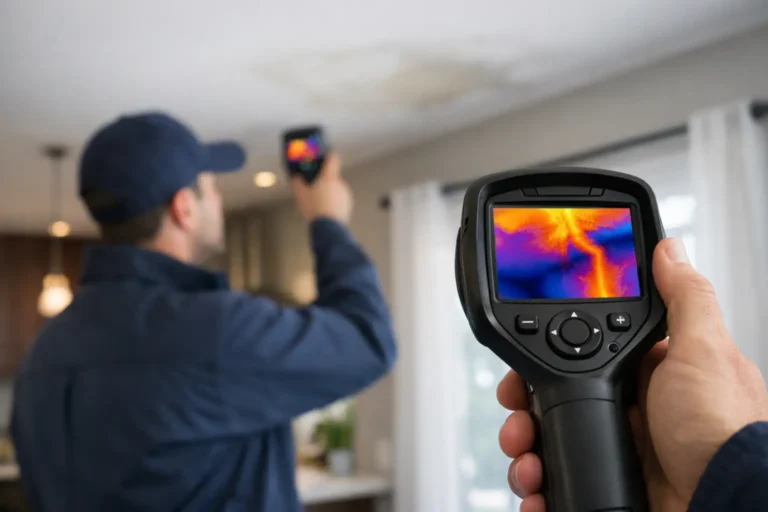
A water stain on a ceiling is obvious. The leak that caused it usually is not. That is why buyers ask about hidden moisture, especially in basements, around bathrooms, and under older roofs. Understanding how thermal imaging finds leaks helps you see why a proper inspection can catch problems before they turn into repairs you inherit after closing.
Thermal imaging does not see water directly. It reads surface temperature differences. When moisture gets into building materials like drywall, insulation, or subflooring, it often changes how those materials hold and release heat. That temperature variation can show up on an infrared camera as a cooler or warmer area compared to the surrounding surface.
In a home inspection, that matters because leaks rarely announce themselves at the exact source. Water can travel along framing, collect behind finished surfaces, or soak insulation before any visible damage appears. A thermal camera gives the inspector another way to spot suspicious patterns that deserve a closer look.
How thermal imaging finds leaks
The short version is simple. Wet materials tend to behave differently than dry ones, and an infrared camera can show that difference when conditions are right.
If a roof leak has dampened insulation in an attic, that section may cool or warm at a different rate than the surrounding area. If a plumbing leak is active behind a wall, the affected surface may appear noticeably cooler. If moisture is trapped under flooring, the floor can show an irregular temperature pattern that does not match the rest of the room.
That does not mean every cool spot is a leak. Air movement, missing insulation, HVAC ducts, exterior temperature, and even sunlight on a wall can create thermal anomalies. A good inspector does not point at a colorful image and call it done. The camera identifies an area of concern. Then the inspector uses moisture testing, visual inspection, and building knowledge to determine whether the pattern is consistent with leakage.
That is where buyers often get real value. The camera is not the answer by itself. It is a tool that helps the inspector ask better questions in the right places.
What thermal imaging can reveal during an inspection
In residential homes, thermal imaging is especially useful because many leak-prone areas are partly hidden by finishes. A standard visual walkthrough can miss what has not yet stained, sagged, or rotted.
Around bathrooms, thermal imaging may reveal moisture near tubs, showers, toilets, and supply lines. These are common trouble spots because small plumbing failures can go unnoticed for a long time. A loose toilet seal, a slow drain leak, or failed caulking around a shower can damage subfloors gradually, and buyers may not know until flooring softens or mold starts to grow.
In kitchens and laundry areas, leaks around dishwashers, sink drains, refrigerator lines, and washing machine connections can show as unusual temperature patterns at cabinets, walls, or flooring. Sometimes the issue is active. Sometimes it is older damage that still suggests a history of leakage.
Basements are another major area of concern in Edmonton-area homes. Foundation seepage, grading issues, window well leaks, and moisture intrusion at the base of walls may create thermal differences that point to hidden dampness. On a finished basement, that matters because visible drywall can hide a lot.
Roof-related moisture can also show up, although timing and conditions matter. Water entering through flashing, roof penetrations, or aging roofing materials may affect attic insulation or ceiling surfaces in ways the camera can detect. In some cases, the thermal pattern helps narrow down where the inspector should investigate further rather than guess at a broad stain or assume the source.
Why thermal imaging is useful for homebuyers
If you are buying a house, the problem is not just whether a leak exists today. The bigger question is what that leak has already damaged and what it could cost you after possession.
A hidden moisture issue can lead to ruined insulation, rotted sheathing, damaged drywall, warped flooring, mold growth, and electrical concerns if water reaches wiring or fixtures. Even a small plumbing leak can become expensive when it has been active for months behind a finished wall.
This is why thermal imaging is valuable in a pre-purchase inspection. It can reveal issues that would not stand out in a quick showing or a basic walk-through. That gives buyers a chance to request repairs, renegotiate, budget realistically, or decide whether the risk is worth taking.
For first-time buyers, this matters even more. A home can look clean, freshly painted, and well staged while still hiding moisture problems. Cosmetic updates do not tell you what is happening behind a wall or under a bathroom floor.
Where thermal imaging works well and where it has limits
Infrared cameras are useful, but they are not magic. That is an important distinction.
Thermal imaging works best when there is enough temperature contrast to make an anomaly visible. If conditions are too uniform, a leak may not show clearly. If moisture has already dried, the camera may not detect anything unusual even though staining or past damage exists. If the leak is very small or very deep within the assembly, the surface temperature change may be too subtle to read with confidence.
False positives are also possible. Missing insulation can look similar to moisture in some situations. Air leakage around windows, attic hatches, and electrical penetrations can create cool areas that resemble dampness. HVAC registers and duct runs can affect nearby surfaces. Sun loading on exterior walls and roofs can change temperature patterns too.
That is why experience matters. A trained inspector understands the difference between a thermal anomaly and a confirmed leak. The camera helps locate concern. It does not replace judgment.
Why moisture testing still matters
If you want the plain answer, here it is: thermal imaging suggests, moisture testing confirms.
Once an infrared image shows a suspicious area, the next step is to verify it. A moisture meter can help determine whether the material actually contains elevated moisture. The inspector also considers the location, the home’s layout, plumbing fixtures on the opposite side of the wall, roof details above the ceiling, and whether the pattern makes sense for the way water typically travels.
That layered approach is much more reliable than using any single tool alone. It reduces guesswork and gives the buyer clearer information. Instead of a vague statement that something looks off, you get a more useful explanation of what was observed, why it matters, and what follow-up may be needed.
For a buyer under contract, that clarity is the real advantage. You do not need drama. You need facts you can act on.
How thermal imaging finds leaks without damaging the home
One practical benefit of infrared scanning is that it is non-invasive. The inspector can scan walls, ceilings, and floors without opening them up. That makes it a smart first step during a real estate inspection, where time is limited and the home usually still belongs to the seller.
If the camera identifies a suspicious cold area below a second-floor bathroom, for example, the inspector can focus attention there and use other non-destructive tools to gather more evidence. That is far better than missing the issue entirely or making assumptions based only on a faint stain or a seller disclosure.
For buyers, this means more information with less disruption. You get a stronger picture of the home’s condition before you commit.
What buyers should take away from a thermal image
Do not think of thermal imaging as a gadget add-on. Think of it as a way to reduce blind spots.
A useful inspection is not about producing flashy images. It is about identifying hidden conditions that affect your negotiation, your repair planning, and your confidence in the purchase. When thermal imaging is included as part of a thorough inspection, it can help uncover moisture issues early enough for you to make a better decision.
At JBR Inspections, thermal imaging is part of that bigger job. The goal is not to overwhelm buyers with technical jargon. It is to show where concerns exist, explain what they likely mean, and give you clear next steps while there is still time to act.
If you are buying a home, the smartest move is not hoping there are no hidden leaks. It is making sure someone knows where to look, how to verify what they find, and how to explain it in plain English before the house becomes your problem.