
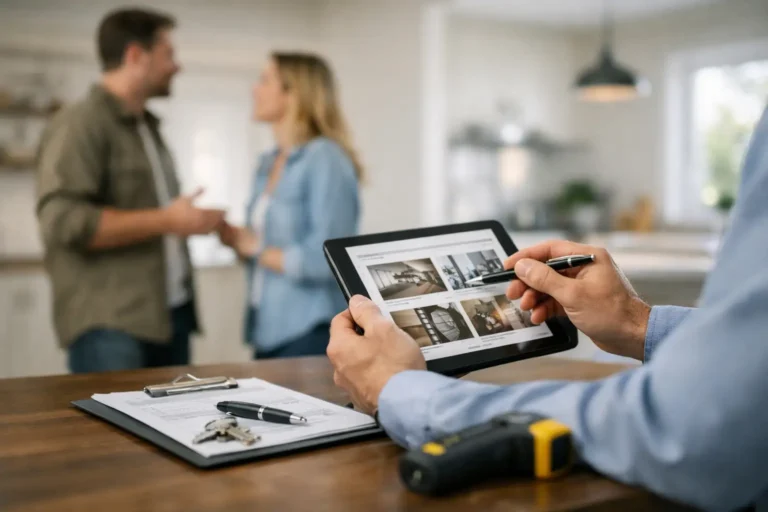
You do not have a week to figure out whether the house has a bad roof, unsafe wiring, or moisture where it should not be. In a real estate deal, timing matters. A same day inspection report gives buyers something they usually do not have enough of during escrow – clear information while there is still time to act on it.
That speed only matters if the report is useful. A rushed document full of vague comments and boilerplate does not help much. Buyers need a report they can actually read, understand, and use to make decisions about repairs, pricing, or whether the house is still the right purchase.
What a same day inspection report should actually do
A good inspection report is not just proof that an inspection happened. It is a decision-making tool. It should show you what was found, where it matters, and how serious it may be without burying the important issues under pages of filler.
For most buyers, the real question is not whether a home has defects. Nearly every home does. The real question is whether the defects are minor maintenance items, predictable aging, or signs of a larger financial problem. That is where the quality of the report matters just as much as the speed.
A strong same day inspection report should separate cosmetic issues from meaningful concerns. If a furnace is near the end of its service life, that needs to be clear. If the attic shows signs of moisture staining, that deserves context. If there are electrical hazards, roof damage, plumbing leaks, or foundation movement, those items should stand out right away instead of getting lost in a long list of small notes.
Fast is helpful. Clear is what protects you.
Buyers are often told they need a fast report, and that is true. But speed by itself does not protect anyone. Clarity does.
A clear report explains findings in plain English. It tells you what was observed, why it matters, and what the next step may be. That could mean monitoring an issue, budgeting for replacement, asking for repairs, or bringing in a specialist before the deal moves forward.
This is especially important for first-time buyers. If you are looking at comments about double-tapped breakers, poly-B piping, grading concerns, or possible heat loss around windows, you should not need a construction background to understand whether that is routine or serious. The report should do that work for you.
That is also why bloated reports can create problems. More pages do not always mean more value. Sometimes they just create noise. Buyers need the inspector to identify the items that actually affect safety, function, and cost.
Why same-day delivery matters in a real transaction
Real estate deadlines are tight, and they rarely get looser just because a house turns out to have issues. Inspection contingency periods, repair negotiations, financing timelines, and moving plans all keep moving.
When a report arrives the same day, buyers have a better chance to respond while there is still leverage. You can review the findings, talk through concerns, and decide what to request from the seller before the clock runs out. If the report takes too long, your options can narrow fast.
A same day inspection report also helps reduce one of the worst parts of the buying process – the gap between concern and clarity. Waiting several days after an inspection leaves buyers guessing. They remember a few comments from the walkthrough, fill in the blanks with worst-case scenarios, and start making decisions based on stress instead of facts.
When the report shows up the same day, that uncertainty drops. You can see the findings while the inspection is still fresh in your mind and while you still remember what the inspector pointed out on site.
What should be in the report
The best reports are specific without being overwhelming. Buyers should expect a digital report that includes clear descriptions, supporting photos, and direct language about the condition of major systems.
That means roofing, structure, exterior components, grading, attic conditions, insulation, plumbing, electrical, heating, cooling, windows, doors, and visible interior issues. It should also call out signs of active or past moisture intrusion, unsafe electrical conditions, aging mechanical equipment, and any visible evidence of poor repairs or deferred maintenance.
Photos make a big difference. So does thermal imaging when used properly. If an inspector identifies temperature anomalies that suggest missing insulation, moisture concerns, or heat loss, those findings need context. The same goes for roof observations supported by drone photography. These tools are valuable when they help explain what cannot be safely or easily seen from the ground.
The point is not to impress you with gadgets. The point is to give you a clearer picture of the house you are about to buy.
Same day inspection report vs. same day checklist
Not every fast report is the same. Some are basically checklists with little explanation. They may be delivered quickly, but they leave buyers asking the same question afterward – so what does this mean?
A real report should not force you to interpret technical notes on your own. If the plumbing system shows older materials that are more failure-prone, say that. If the roof covering has limited remaining life, say that. If there are moisture readings in an area where moisture should not be present, explain the likely concern and the recommended next step.
This is where experience shows. A thorough inspector knows how to prioritize findings and explain them without overreacting or downplaying them. That balance matters. Buyers need honesty, not drama. They also need more than a generic checkbox report that treats a loose door handle and a possible structural issue like they belong in the same category.
What buyers in Edmonton-area homes should pay attention to
In the Edmonton metro area, certain issues tend to matter more because of climate, age of housing stock, and common construction patterns. Buyers should pay close attention to attic insulation and ventilation, foundation movement, moisture around basements, roof wear from weather exposure, aging furnaces and water heaters, and electrical or plumbing materials that may be nearing the end of their practical service life.
Drainage and grading also matter more than many buyers realize. Water does not need much help finding a path into a basement. Exterior slope, downspout discharge, and signs of past moisture entry deserve a close look.
The same goes for roofing. A roof can look fine from the driveway and still have damage, wear, or installation problems that show up only with a closer view. That is one reason documented roof photography can be so useful in a same-day report. It gives buyers actual visibility instead of guesswork.
The best report still comes with a conversation
Even a very good report is only part of the value. Buyers should be able to ask questions after they receive it, especially if they are deciding whether to renegotiate or move ahead.
Some findings are straightforward. Others depend on age, maintenance history, visible conditions, and risk tolerance. An older furnace that still operates may not be a reason to walk away, but it could be a reason to budget for replacement soon. Minor settlement cracks may be common in one context and more concerning in another. The report should guide you, and the inspector should be available to explain the bigger picture.
That is where a company like JBR Inspections stands apart. The goal is not to hand over a document and disappear. The goal is to give buyers clear findings the same day and make sure they understand what those findings mean before they make a major financial decision.
When speed can be a red flag
There is one trade-off worth acknowledging. Fast delivery is good. Cutting corners to get there is not.
If an inspector promises a same day inspection report but rushes through the house, skips accessible areas, or relies on canned comments instead of real observations, the quick turnaround loses its value. Buyers should want both – a thorough inspection and a report delivered while it still helps.
That is why the right question is not just, Do you send reports the same day? It is, Will the report be thorough, understandable, and detailed enough to help me act on it?
A house does not become safer because the PDF arrives quickly. It becomes easier to evaluate because the right information shows up at the right time, in language you can actually use.
When you are buying a home, clarity is not a luxury. It is protection. And if that clarity arrives the same day, you are in a much better position to make a smart call before the deal gets away from you.