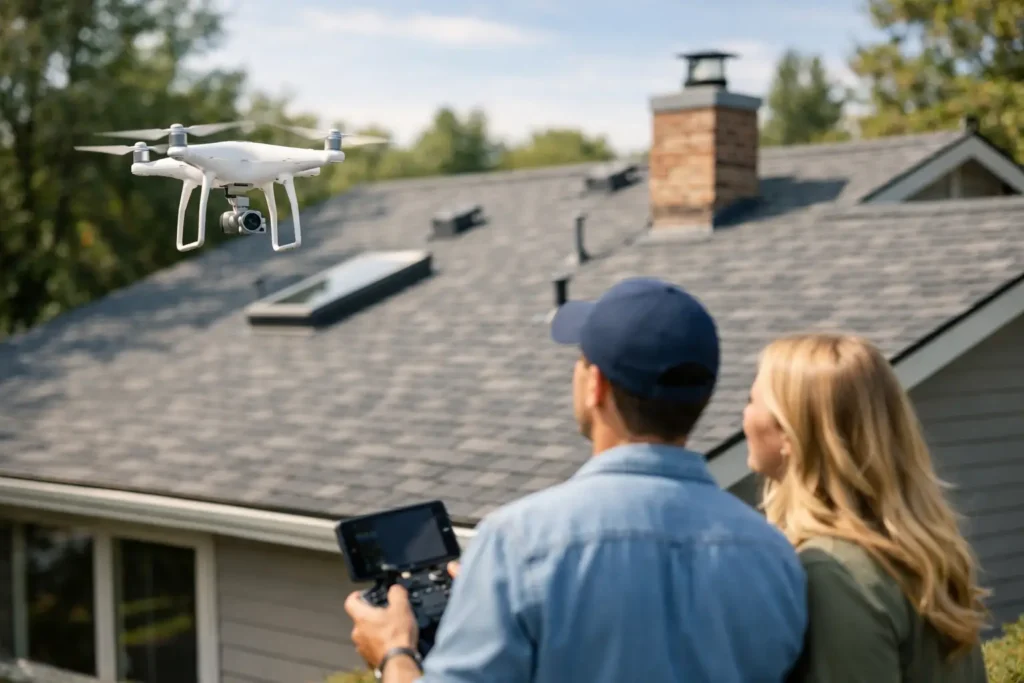
A roof can hide a lot from the ground. You might see a few missing shingles from the driveway and assume that is the whole story, but a proper drone roof inspection for home buyers often shows a very different picture – damaged flashing, exposed fasteners, ponding areas, patchwork repairs, and signs the roof may be closer to replacement than the listing suggests.
For buyers, that matters because roofing problems are rarely cheap, and they rarely stay isolated. A roof issue can lead to attic moisture, insulation damage, stained ceilings, mold concerns, and even electrical risks if water travels far enough. If you are buying in the Edmonton area, where snow, ice, wind, and freeze-thaw cycles put real stress on roofing materials, getting a clear view of the roof is not a bonus feature. It is part of making a smart decision before you close.
Why drone roof inspection for home buyers matters
Many buyers still picture a roof inspection as someone standing on the ground with binoculars or taking a quick look from a ladder. That can catch some obvious defects, but it has limits. Certain roof slopes are unsafe to walk. Some materials can be damaged by foot traffic. And from the edge of the roof, you still do not always get a complete view of valleys, flashing transitions, chimney details, or localized wear patterns.
A drone changes that. High-resolution aerial images can show the full roof surface from multiple angles, including areas that are hard to assess safely by traditional methods alone. For a buyer, the value is simple: better visibility, better documentation, and fewer guesses.
That does not mean a drone replaces inspection experience. It only works when the person reviewing the images knows what roofing failure looks like and understands how those conditions affect the rest of the home. Good roof photography is useful. Good interpretation is what protects the buyer.
What a drone roof inspection can actually reveal
A proper drone roof inspection for home buyers is not about getting impressive aerial shots. It is about identifying defects that affect cost, safety, and future maintenance.
Shingle damage is one of the most common findings. That includes curling, cracking, blistering, granule loss, lifted tabs, and missing sections. Some of these issues point to simple age and weathering. Others suggest wind damage or poor installation. The difference matters because one may call for routine budgeting while the other could justify repair requests before closing.
Flashing problems are another major issue. Around chimneys, roof-wall intersections, plumbing vents, skylights, and valleys, flashing is what keeps water out of the structure. When flashing is loose, improperly sealed, rusted, or missing, leaks can develop long before the damage becomes visible indoors.
Drones also help identify sagging roof lines, uneven wear, patch repairs, exposed nail heads, damaged vent caps, clogged valleys, and soft-looking areas that raise concern about underlying sheathing. Flat and low-slope sections deserve extra attention because ponding water, membrane wear, and drainage issues can shorten roof life quickly.
In colder climates, ice dam patterns and roof ventilation concerns may also leave visible clues. You are not always diagnosing the full cause from the exterior image alone, but you are seeing warning signs that deserve follow-up.
What buyers can do with that information
The point of a roof inspection is not to create panic. It is to replace uncertainty with facts.
If the drone images show a roof in generally serviceable condition with normal aging, that is useful. You move forward with better confidence and a more realistic maintenance plan. If the inspection shows moderate wear, localized damage, or repairs that should be addressed soon, you have something concrete to discuss with your agent and seller. If serious defects are found, you may choose to renegotiate, request repairs, seek specialist evaluation, or rethink the purchase entirely.
That is where buyers often make the biggest mistake. They treat roof issues as cosmetic or assume they can deal with them later. But later usually means after possession, when the cost is yours and the urgency is higher. A roof near the end of its life is not always a deal-breaker, but it should be priced into your decision.
Drone inspection is better, but it still has limits
A no-nonsense inspection should be clear about this: drone imaging is valuable, not magical.
A drone can document visible exterior conditions extremely well, but it cannot see through roofing materials. It will not confirm every hidden leak, substrate problem, or attic condition on its own. That is why the best roof assessment is part of a full home inspection, not a standalone photo exercise.
Attic access, insulation conditions, signs of prior water intrusion, ventilation performance, and moisture indicators all help complete the picture. Thermal imaging can also support the inspection when conditions allow, especially when looking for temperature differences associated with moisture or heat loss. In other words, roof photography is strongest when combined with broader inspection evidence.
Weather can also affect what is visible. Snow cover, heavy frost, or debris can limit the ability to assess the roofing surface. That does not make the inspection worthless, but it may change how much can be confirmed at that time. An honest inspector will tell you what was visible, what was not, and what that means for your risk.
Why this matters even more in Edmonton-area home purchases
Roofs in the Edmonton region take a beating. Long winters, sudden temperature swings, hail exposure, wind events, and seasonal thawing can shorten material life and expose installation weaknesses. A roof that looks acceptable from the street may still have damage that only shows up from above.
This matters for newer homes and older homes alike. On newer homes, the concern may be workmanship, flashing details, or storm damage that has not yet caused interior staining. On older homes, the bigger question is often remaining life expectancy, prior repairs, and whether multiple roofing layers or aging penetrations are creating leak risk.
Buyers under deadline pressure sometimes focus on kitchens, basements, and visible cosmetic updates because those are easy to judge during a showing. The roof gets less attention because it is harder to access and easier to assume away. That is exactly why it deserves a closer look.
What to expect from a serious inspection process
If you are paying for an inspection before closing, you want more than a checkbox that says the roof was viewed. You want clear images, plain-English findings, and direct explanation of what matters now versus later.
A strong inspection process documents the roof condition with 4K drone photography, evaluates visible defects, and connects those findings to the rest of the house where relevant. If shingle wear appears advanced, the report should say so clearly. If flashing around a chimney looks compromised, you should understand the leak risk. If the roof is functional but aging, that should be framed as a budgeting issue rather than vague alarm.
You should also expect practical guidance. Does the issue call for monitoring, routine repair, or prompt evaluation by a roofing contractor? Is it a negotiation item or simply part of owning an older home? Buyers do not need inflated language. They need judgment.
That is where an experienced local inspector earns their keep. In Edmonton and surrounding communities, roof conditions have to be read in context. Weather patterns, construction styles, and common regional problem areas all shape what is normal, what is premature, and what should concern you.
Choosing a home inspector who uses drones the right way
Not every inspector who owns a drone uses it well. The tool itself is not the selling point. The quality of the inspection is.
Look for an inspector who includes drone roof photography as part of a comprehensive home inspection, not as a flashy add-on. The report should be same-day or fast-turnaround, easy to understand, and specific about defects. You should be able to ask questions after the inspection and get direct answers, not generic language copied into a bloated report.
That is one reason many buyers in the Edmonton area want an owner-led inspection experience. When the person doing the inspection is the one explaining the findings, there is less room for confusion. JBR Inspections takes that approach because buyers need clarity, not filler.
A home purchase always involves some uncertainty. The goal is not to eliminate every future repair. The goal is to know what you are buying well enough to make a confident decision. When the roof has been properly documented from above and explained in plain English, you are in a much better position to negotiate fairly, budget realistically, and move forward without guessing.
Before you commit to a property, make sure the roof is more than a quick glance from the ground. Expensive surprises usually start in the places buyers cannot easily see.