
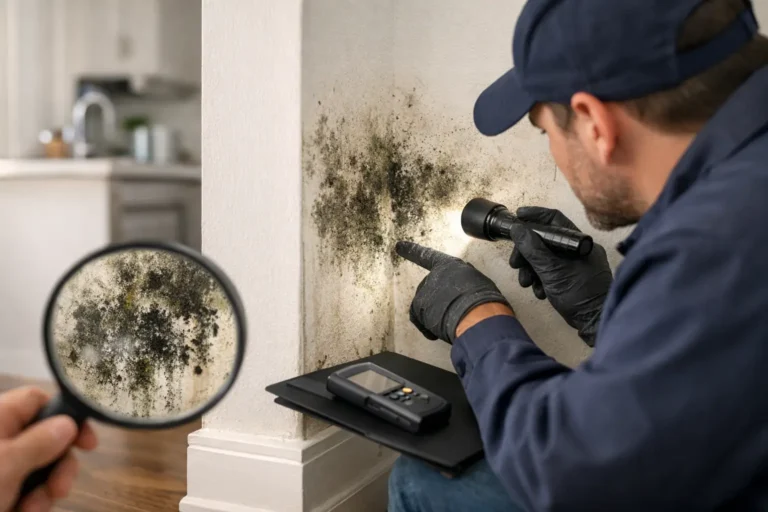
A faint musty odor in a basement, a stain at the edge of an upstairs ceiling, or fresh paint in one small area can change how you view an otherwise promising home. Buyers often ask, “can home inspection find mold?” The honest answer is yes, sometimes, but a home inspection is not the same thing as a laboratory mold test or a guarantee that no mold exists anywhere in the house.
A thorough inspection can uncover the conditions that allow mold to grow: active leaks, elevated moisture, poor drainage, roof defects, plumbing concerns, attic ventilation problems, and condensation. It may also reveal visible growth or damage that deserves further evaluation. For a buyer, that information matters because mold is rarely the first problem. Water is.
Can a Home Inspection Find Mold in a House?
A qualified home inspector looks for accessible, visible signs of moisture intrusion and possible microbial growth throughout the property. This includes areas buyers often do not inspect closely, such as attics, crawlspaces where accessible, mechanical rooms, under sinks, around windows, basement walls, and roof penetrations.
If mold-like growth is visible, it should be documented along with the likely moisture source when that source can be identified. A good report does more than say “mold present.” It explains what was observed, why it may be occurring, how urgent it appears, and what type of specialist or repair may be appropriate.
The inspection can also identify signs that may point to a concealed issue. Peeling paint, warped trim, swollen flooring, rust at plumbing connections, repeated ceiling staining, damp insulation, or a high moisture reading in a wall are not proof of mold on their own. They are warning signs that further investigation may be justified before you remove conditions or finalize the purchase.
That distinction is worth understanding. Mold may be present without a strong odor, and a musty odor does not confirm the type or amount of mold. An inspector should not guess. The job is to identify observable concerns and the building conditions creating risk, then give you practical next steps.
What a Standard Home Inspection Cannot Do
Home inspectors perform non-invasive visual inspections. They do not typically open walls, pull up finished flooring, remove insulation, or dismantle cabinets to search for hidden mold. Those actions can cause damage and may require the seller’s written permission, a remediation contractor, or a specialized environmental professional.
A standard inspection also does not identify mold species by sight. Dark staining is not automatically “black mold,” and color is not a reliable way to determine whether material is hazardous. Proper identification requires sampling and laboratory analysis.
This means a home can pass a general visual review and still have mold concealed behind finished walls, under flooring, or inside a closed ceiling cavity. That is not necessarily an inspection failure. It reflects the limits of inspecting a finished, occupied building without destructive testing.
The reverse is also true: a stained area may be old, dry, and no longer supporting active growth. It still deserves attention because the original water entry must be understood, but the response may be very different from an ongoing plumbing leak or a wet attic.
How Moisture Testing and Thermal Imaging Help
Moisture testing gives the inspection more substance than a visual walkthrough alone. A moisture meter can help identify elevated readings in building materials around stained drywall, exterior walls, windows, plumbing fixtures, and foundations. High readings can support a recommendation for further assessment, repair, or mold testing.
Thermal imaging can also be useful because wet materials often change temperature differently than dry materials. A cooler area on an interior wall, for example, may indicate moisture, missing insulation, air leakage, or simple temperature variation. Thermal imaging does not see through walls and cannot confirm mold. It helps direct attention to areas that should be checked with a moisture meter and visual assessment.
That is why tools matter, but interpretation matters more. A thermal image without context can create unnecessary alarm. A moisture reading without an understanding of the home’s construction, weather conditions, and potential water sources can be misleading. The value comes from combining the tools with a careful inspection of the roof, exterior drainage, windows, attic, plumbing, and interior finishes.
Common Mold Risk Areas in Edmonton Homes
Edmonton-area homes face long heating seasons, major temperature swings, snow accumulation, and spring melt. Those conditions can expose weak points in a home’s moisture management system.
Attics are a frequent concern. Warm, moist household air can escape into a cold attic through gaps around lights, bathroom fans, attic hatches, or unsealed penetrations. When that moisture condenses on cold roof sheathing, it can lead to staining, frost buildup, damp insulation, and potential mold growth. Poor bathroom fan termination and inadequate attic ventilation can make the problem worse.
Basements deserve close attention as well. Look for wall staining, musty odors, efflorescence, deteriorated finishes, and signs that water has entered near windows or along foundation walls. Grading that slopes toward the home, downspouts discharging too close to the foundation, and poor drainage can all contribute to basement moisture.
Bathrooms, kitchens, laundry rooms, and utility rooms have obvious water sources but are easy to overlook during a showing. Leaks under sinks, failed caulking, loose toilets, aging supply hoses, and slow plumbing drips can wet materials for months before they become obvious. A roof leak can be just as quiet, especially if water travels along framing before it reaches a ceiling surface.
When Mold Testing Makes Sense Before Closing
Mold testing is not necessary for every home purchase. If an inspection finds no visible concerns, no moisture issues, no meaningful odors, and no history of water damage disclosed by the seller, testing may not add enough useful information to justify the cost.
It is more reasonable to consider testing when there is visible suspected growth, a persistent musty odor, recent or recurring water damage, elevated moisture readings, extensive staining, or a buyer with health sensitivities who needs more certainty. Testing may include surface samples, air samples, or both, depending on the concern. A qualified mold professional can recommend the right method rather than collecting samples with no clear question in mind.
Keep expectations realistic. Air samples are a snapshot of conditions at the time of testing. Results can be affected by weather, open windows, HVAC operation, recent cleaning, and normal variations in airborne particles. A clean air sample does not erase a visible moisture problem, and a sample result should never replace correcting the water source.
What Buyers Should Do if Mold or Moisture Is Found
Do not let the word “mold” force a rushed decision. Ask what is visible, how large the affected area is, whether materials are currently wet, and what appears to be causing the condition. Then determine whether the issue is isolated and repairable or part of a broader pattern involving the roof, plumbing, attic, foundation, or ventilation.
For a small, clearly understood issue, you may be able to request repairs, a credit, or documentation that the underlying leak has been corrected. For widespread growth, an active leak, or damage in a concealed area, a specialist evaluation before closing is usually the smarter move. The goal is not to make the seller promise to “clean the mold.” The goal is to confirm that the moisture source, damaged materials, and any necessary remediation are properly addressed.
Keep the inspection report, specialist findings, repair invoices, and any re-inspection notes. Those records give you a clearer basis for negotiating and a better picture of what you may inherit with the home.
A home inspection should give you facts, not false certainty. At JBR Inspections, the focus is on finding the visible defects and moisture conditions that can become expensive surprises, then explaining what they mean in plain English. Before you close, the right question is not simply whether mold exists. It is whether the home has a moisture problem that has been identified, understood, and dealt with properly.