
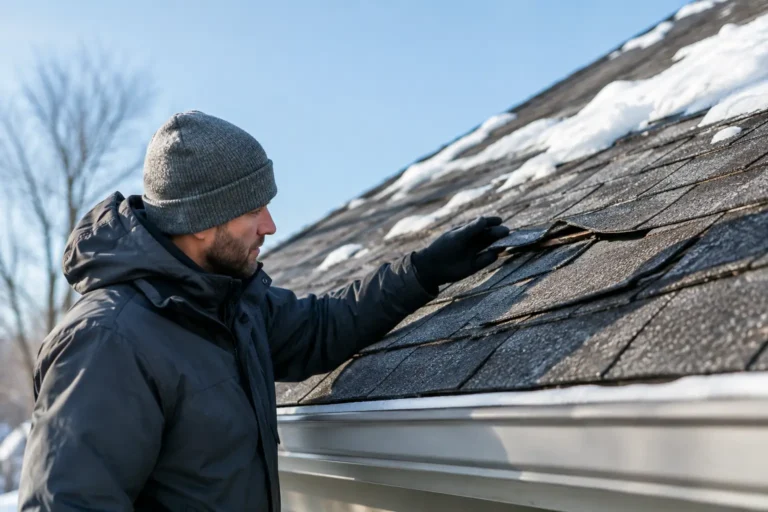
A roof can look perfectly acceptable from the driveway and still have a problem that only shows up after an Edmonton winter. Snow load, freeze-thaw cycles, wind, ice dams, and blocked drainage can all create roof damage signs after winter. For a homebuyer, the concern is not simply whether a few shingles look worn. The real question is whether winter exposed an active leak, shortened the roof’s remaining life, or created a repair bill that should be addressed before closing.
A quick look is not enough. Some roof issues are visible from the ground, while others leave their first clues in the attic, on ceilings, or around exterior details. Knowing what to look for helps buyers ask better questions and avoid treating a potentially expensive defect as a minor maintenance item.
1. Missing, lifted, or cracked shingles
High winds and repeated temperature swings can loosen shingles, break their seal, or pull them away from the roof deck. From the ground, look for uneven areas, exposed dark patches, curled shingle edges, or shingles that appear to be sitting higher than the surrounding rows.
Missing shingles are the obvious concern, but lifted shingles matter too. A lifted edge can allow wind-driven rain or melting snow underneath the roofing material. In Edmonton’s climate, water that enters a small opening can freeze, expand, and make the opening worse.
A few damaged shingles may be a straightforward repair if the rest of the roof is in good condition and matching materials are available. Widespread curling, brittleness, or repeated patching is different. That can point to an aging roof nearing replacement, even if it is not leaking at the moment.
2. Granules collecting in gutters or at downspouts
Asphalt shingles are coated with protective mineral granules. Those granules help shield the roof from sunlight and weather. Some granule loss is normal over time, especially on an older roof, but heavy accumulation after winter deserves attention.
Check the bottom of downspouts, gutter channels, and the area below roof drainage points. A small amount of grit does not automatically mean the roof has failed. Large deposits, bare-looking shingle patches, or granules combined with cracking and curling can indicate that the shingles are deteriorating.
For buyers, this is a useful example of why roof condition should not be judged by age alone. A roof installed 15 years ago may still have useful life if it was properly installed and maintained. Another roof of the same age may be well into its decline because of poor ventilation, storm exposure, or material quality.
3. Water stains on ceilings, walls, or attic sheathing
Water staining inside the home is one of the most serious roof damage signs after winter, but it requires careful interpretation. A stain near the ceiling can result from a roof leak, failed flashing, condensation, plumbing, or an older issue that has already been repaired. The stain itself is evidence, not a complete diagnosis.
Look for yellow or brown rings on upper-floor ceilings, peeling paint, soft drywall, damp insulation, or a musty smell in closets near the roofline. In the attic, dark staining on roof sheathing, wet insulation, active drips, or rusted nails can provide stronger clues about moisture entry.
Timing matters. A stain that appeared after a thaw or heavy spring rain is more concerning than a documented, dry stain from years earlier. Even then, a seller’s statement that a leak was repaired should be supported by evidence that the cause was corrected, not simply covered with fresh paint.
Thermal imaging and moisture testing can help identify areas that warrant closer investigation, particularly when visible damage is subtle. They do not replace a proper roof assessment, but they can reveal conditions that a standard walkthrough may miss.
4. Damaged flashing around chimneys, vents, and walls
Many roof leaks do not begin in the middle of a shingle field. They begin where the roof meets something else: a chimney, plumbing vent, skylight, dormer wall, or valley. These transitions rely on flashing and sealants to direct water away from vulnerable openings.
Winter movement can crack sealant, lift metal flashing, or expose gaps around penetrations. From the ground, look for crooked flashing, missing pieces, excessive roof cement, rusting metal, or loose vent covers. A roof that has been repeatedly coated with sealant around several details may have a history of repairs that deserves a closer look.
Not every sealant repair is a red flag. Small maintenance repairs are normal. The concern is when temporary fixes appear to be standing in for proper flashing installation, or when multiple patched areas sit near interior staining. Those conditions can change a simple repair conversation into a larger negotiation issue.
5. Sagging rooflines or soft-looking areas
A roofline should generally look straight and consistent. A visible dip, sag, or wavy section can indicate a problem below the shingles, such as deteriorated roof decking, framing movement, long-term moisture damage, or excessive loading.
This is not a defect to diagnose from the sidewalk. Perspective, shadows, and architectural design can make a roof appear uneven. But a localized low area, especially near a valley or drainage path, should be taken seriously. If water has repeatedly pooled or entered below the roofing, the repair may involve more than replacing surface shingles.
Buyers should also be cautious when a roof appears unusually soft or uneven in photos. Do not climb onto a roof to test it. Walking on a cold, steep, wet, or compromised roof creates a real safety risk and can cause more damage. A qualified inspection using appropriate access and drone photography is the safer way to document concerns.
6. Ice dam evidence and damaged gutters
Ice dams form when snow melts on a warmer upper roof surface, then refreezes near colder eaves. The resulting ice can trap meltwater and force it beneath shingles. A home may not have visible ice dams by the time you view it in spring, but their effects can remain.
Watch for bent gutters, loose downspouts, damaged fascia boards, peeling paint at eaves, stained soffits, or water marks near exterior walls. Large icicles alone do not prove roof failure, but they can signal drainage or insulation and ventilation conditions worth reviewing.
The solution depends on the cause. Clearing gutters may help if drainage is restricted. Improved attic air sealing and insulation may be needed if heat loss is contributing to snow melt. In other cases, roof detailing at the eaves or prior water damage needs repair. A seller should not dismiss recurring ice dams as just part of a Canadian winter if they have caused visible damage.
7. Attic ventilation and insulation problems
Roofing materials do not work alone. The attic plays a major role in how a roof handles winter. Poor ventilation, inadequate insulation, and air leaks from the living space can create excess heat and moisture under the roof deck.
In the attic, look for compressed or uneven insulation, blocked soffit vents, frost on nails or sheathing, mold-like staining, and bathroom exhaust ducts that terminate in the attic instead of outdoors. Frost accumulation can melt during warmer weather and mimic a roof leak, which is why identifying the moisture source matters.
A ventilation issue may not require a new roof today, but it can shorten shingle life, contribute to ice dams, and create ongoing moisture concerns. It should be factored into your repair budget rather than treated as an unrelated attic detail.
What homebuyers should ask before closing
When a roof concern appears during a showing or inspection, ask direct questions. How old is the roof? Has it leaked, been repaired, or been replaced? Are there invoices, warranties, or photos of the work? Has the attic ever had moisture, frost, or mold concerns? Clear answers and documentation are more useful than broad assurances that the roof is “fine.”
The right next step depends on the finding. A few damaged shingles may justify a targeted repair estimate. Evidence of active moisture, extensive deterioration, sagging, or questionable prior repairs may call for assessment by a qualified roofing contractor. If the roof has limited remaining life, buyers can use that information to negotiate a price adjustment, request repairs, or plan their budget with open eyes.
At JBR Inspections, roof observations are documented with 4K drone photography on every property, alongside a broader review of the attic, interior moisture indicators, and exterior drainage details. That perspective helps buyers see the condition being discussed instead of relying on vague wording in a report.
A winter-tested roof does not have to be a deal-breaker. But before you remove conditions, make sure you understand whether the home needs routine maintenance, a near-term repair, or a replacement that could reshape the cost of your purchase.