
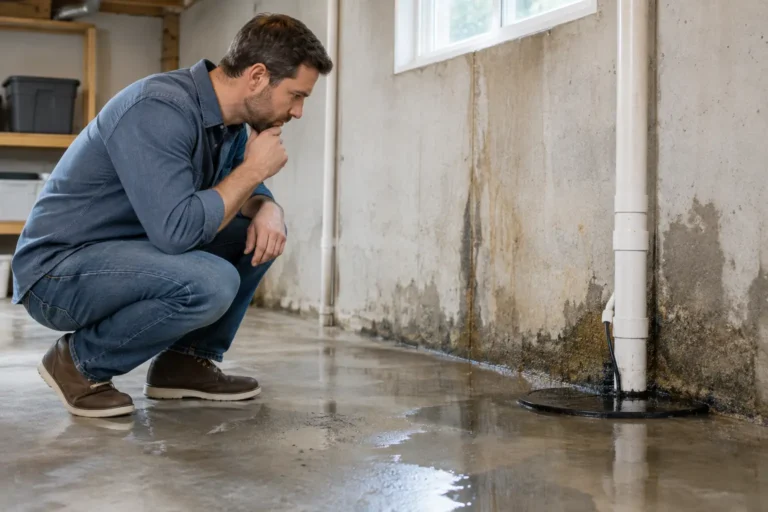
A basement can look clean, dry, and ready for storage during a showing, then reveal a much different story after the first heavy rain or spring thaw. The five costly basement water problems below are the ones homebuyers should take seriously before removing conditions. Some are visible. Others leave subtle clues that require moisture testing, thermal imaging, and a careful look at how the entire property handles water.
For Edmonton-area buyers, the stakes are higher than a damp corner or a musty smell. Our freeze-thaw cycles, snow loads, clay soils, and sudden summer downpours can put real pressure on foundation walls, grading, roof drainage, and below-grade plumbing. The right question is not simply, “Is there water in the basement today?” It is, “Why has water reached this area, and what will it take to stop it?”
1. Foundation Wall Cracks That Let Water In
Not every foundation crack means structural failure. Concrete shrinks as it cures, and small vertical cracks are common in many homes. But a crack that has stained edges, visible moisture, mineral deposits, patch material, or a history of seepage deserves closer attention.
Water follows the path of least resistance. When soil around the home becomes saturated, hydrostatic pressure pushes moisture against foundation walls. A narrow crack may only leak during a major storm. A wider crack, a horizontal crack, or a crack that changes direction can point to movement, pressure, or settlement that needs a more careful assessment.
The repair range depends on the cause. A straightforward interior or exterior crack repair may be manageable. Excavating around a foundation, correcting drainage, or addressing structural movement is a much larger project. Buyers should not accept fresh paint over a crack as proof that the issue is resolved. Ask whether the crack has leaked, how it was repaired, and whether there is a warranty or supporting documentation.
2. Poor Grading and Roof Drainage
A great deal of basement moisture starts above ground. If the yard slopes toward the house, rain and snowmelt collect beside the foundation instead of moving away from it. Short downspouts, disconnected extensions, overflowing gutters, and settled landscaping can keep the soil wet exactly where it should be dry.
This is one of the most preventable basement water problems, but it is often ignored because the fixes seem simple. In many cases, extending downspouts and restoring proper grading helps reduce water exposure. The trade-off is that simple surface corrections will not solve a basement that already has failed drainage tile, significant foundation cracking, or a long history of seepage.
During an inspection, look beyond the basement walls. Check the roof drainage path, the height of soil against siding or foundation finishes, driveway slopes, window wells, patios, and low areas around the property. A home can have a dry basement on inspection day while its exterior is directing every storm toward the foundation.
3. Failed or Overworked Weeping Tile
Weeping tile, also called foundation drainage, is designed to collect groundwater around the foundation and direct it away. Older homes may have aging systems, damaged sections, poor connections, or drainage that depends heavily on a sump pump. When this system cannot keep up, water pressure builds around the foundation and finds its way through cracks, joints, and penetrations.
Warning signs are not always obvious. Watch for recurring efflorescence, peeling wall finishes, persistent dampness along the base of walls, a sump pump that runs frequently, or evidence of previous water cleanup. Finished basements deserve extra caution because wall coverings, flooring, and storage can hide these clues.
A camera inspection of underground drainage is not part of every standard home inspection, and sometimes further investigation is warranted. That does not automatically mean a buyer should walk away. It means the potential cost should be understood before closing. Replacing or excavating drainage systems can be disruptive and expensive, particularly where decks, landscaping, concrete walks, or additions sit near the foundation.
4. Sump Pump Problems and Backup Failures
A sump pump is often the last line of defense when groundwater reaches the drainage system. If it fails during a storm, loses power, has a blocked discharge line, or sends water too close to the house, a basement can flood quickly.
The pump itself may be inexpensive compared with the damage caused by a failure. Replacement flooring, drywall, insulation, furniture, and mold remediation can add up fast. If the basement contains bedrooms, a home office, or finished recreation space, the financial exposure is even greater.
A buyer should know where the sump pit is located, whether the pump operates, where the discharge line terminates, and whether water can flow away from the house in winter. In Edmonton, frozen discharge lines are a practical concern. A system may appear functional during a mild day yet struggle when ice, snow, or a power outage arrives.
Battery backup systems can provide added protection, but they are not a substitute for correcting poor exterior drainage or a failing foundation drainage system. They also need maintenance and testing. The goal is not to treat the sump pump as a magic solution. It is to understand what it is being asked to manage.
5. Hidden Plumbing Leaks Behind Finished Walls
Not all basement water comes through the foundation. A slow leak from a supply line, drain connection, shower, laundry appliance, water heater, or humidifier can create concealed damage behind drywall or beneath flooring. These leaks often produce a musty odor, staining, warped trim, soft flooring, or elevated moisture readings before they become visibly dramatic.
This is where a basic walkthrough can miss the real issue. A thermal imaging scan may identify temperature differences consistent with moisture, while a moisture meter helps confirm whether building materials are wet. Neither tool sees through walls with perfect certainty, but together with visible evidence and plumbing observations, they can identify areas that deserve further evaluation.
The costly part is usually not the pipe repair. It is the concealed damage. A small leak left in place can affect insulation, framing, flooring, and air quality. In a finished basement, determining the source may require opening walls or ceilings. Buyers should be especially cautious around recently renovated basement bathrooms, wet bars, laundry rooms, and mechanical rooms where fresh finishes can hide recent repairs.
What Buyers Should Do When Basement Moisture Appears
Do not panic over every stain, crack, or patch. Homes age, materials move, and a prior repair can be completely appropriate. But do not let a seller’s quick explanation replace evidence. A good inspection separates a minor maintenance item from a concern that needs a drainage contractor, plumber, foundation specialist, or further investigation.
Documented repairs, dry conditions over time, proper exterior grading, and a working sump system can all be reassuring. On the other hand, active moisture, repeated staining, strong odors, unfinished repair work, or water-damaged materials should affect your decision-making. That may mean requesting repairs, seeking quotes, negotiating the price, or extending the inspection period for more information.
At JBR Inspections, the focus is on explaining what the signs mean in plain English, not burying buyers in vague language. Moisture testing, thermal imaging, and a close look at drainage conditions help turn a worrying basement clue into an actionable next step.
Before you commit to a home, take basement water seriously enough to ask one more question and get one more answer. A clear understanding before closing is far less expensive than discovering the problem after the next thaw.