
A clean basement and good water pressure can make an older home’s plumbing look reassuring. But polybutylene pipe identification is not about whether the pipes look clean from the outside. It is about recognizing a material with a known history of sudden leaks, understanding where it is installed, and knowing what that risk could mean before you remove conditions.
For buyers considering homes built or updated from the late 1970s through the mid-1990s, this is a practical issue. Polybutylene plumbing may be hidden behind finished walls, above ceilings, or below floors. A quick showing will not tell you much. A careful inspection can tell you where visible piping is located, what material it appears to be, and whether there are signs of prior leakage or repairs.
What Is Polybutylene Pipe?
Polybutylene, commonly called PB, is a flexible plastic water-supply pipe used in many North American homes for a period of time. It carried hot and cold water to fixtures such as sinks, toilets, tubs, washing machines, and water heaters. It is not the same as modern PEX piping, although the two can look similar at a glance.
PB was popular because it was inexpensive, lightweight, and faster to install than copper. Over time, however, some systems developed failures. The pipe can deteriorate internally, and failures can occur at fittings, connections, or along the pipe itself. Water treatment chemicals, heat, installation quality, pressure, and the specific fitting type can all affect performance.
That does not mean every home with PB piping has an active leak. Some systems have operated for years without an obvious problem. The concern for a buyer is that a visual inspection cannot prove the remaining service life of plastic plumbing hidden inside walls.
Polybutylene Pipe Identification Signs
The most reliable identification comes from printed markings on the pipe. Look for the letters PB or PB2110 stamped along its length. The marking may also include the pipe size, pressure rating, manufacturer information, and certification markings. Dust, paint, insulation, and tight installation areas can make these markings hard to find.
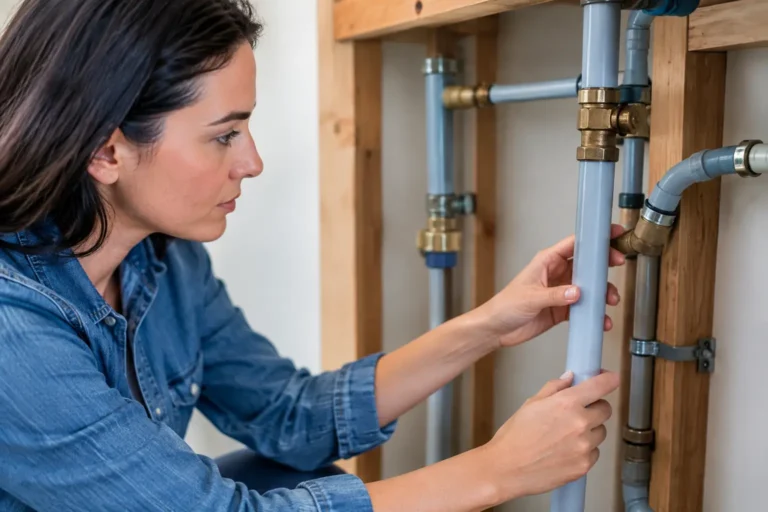
Polybutylene pipe is commonly gray, although color alone is not proof. Other plumbing materials can also be gray, and PB may not look identical in every installation. It is usually flexible rather than rigid, and it is most often found in smaller water-supply sizes such as 1/2-inch or 3/4-inch pipe.
Visible fittings may offer another clue. PB systems were installed with several fitting types, including plastic, aluminum, copper, or brass components. Crimp rings or clamps may be visible at the connections. Fittings can help an experienced inspector narrow down what they are seeing, but the pipe marking is still the best confirmation.
Do not assume gray pipe means PB, and do not assume white or blue flexible pipe is safe simply because it is plastic. Modern PEX has its own identifying marks, usually including PEX or PEX-a, PEX-b, or PEX-c. The label matters more than the color.
Where to Look in an Older Home
The easiest places to find visible supply plumbing are the areas where pipes enter or serve equipment. Start in the mechanical room near the water heater, furnace room plumbing, water softener, or utility sink. Look beneath kitchen and bathroom sinks, behind removable bathtub access panels, around laundry connections, and in unfinished basement ceilings.
In a home with a finished basement, much of the plumbing may be concealed. That is common, and it limits what any non-invasive inspection can verify. An inspector should not cut open drywall or remove finished surfaces during a standard home inspection. Thermal imaging and moisture testing can help identify signs consistent with active moisture, but they do not identify every hidden pipe or predict every future failure.
Pay attention to transition points. If visible PB pipe changes to copper, CPVC, or PEX near a mechanical room, that may indicate a partial repair rather than a full replacement. Partial replacement is not automatically a problem, but buyers need to know how much original PB remains and where it is located.
Why Buyers Should Take It Seriously
The biggest concern is not that PB automatically fails on closing day. The concern is uncertainty. A concealed plumbing failure can cause extensive damage before it is discovered, especially in a finished basement, behind a kitchen cabinet, or inside a wall near electrical components.
Water damage can involve drywall removal, flooring replacement, mold remediation, cabinet repairs, and restoration work in addition to plumbing costs. If an insurer restricts coverage for a home with polybutylene plumbing, the financial decision becomes even more complicated. Insurance availability and requirements vary by provider, so buyers should confirm the home’s insurability before finalizing a purchase.
For an older home, the condition and history of the plumbing system matter as much as the material. Evidence of staining, corrosion at connections, previous repairs, water marks, patched ceilings, or a musty odor should be taken seriously. These signs do not prove PB caused the issue, but they justify further investigation.
What a Home Inspection Can and Cannot Tell You
A home inspection is a visual, non-invasive assessment of accessible systems. It can identify visible pipe materials, observe accessible connections, test representative fixtures, check for apparent leakage, and use moisture testing where conditions warrant. At JBR Inspections, the goal is to explain what is visible and what it means for a purchase decision without burying buyers in vague language.
An inspection cannot see every pipe behind walls or determine whether a concealed PB line will fail next month or years from now. It also cannot confirm a complete replacement based only on a few visible sections of newer piping. Sellers may describe plumbing as updated when only selected areas were repaired.
When visible PB is found, the report should clearly state its location, any observed concerns, and the limits of the observation. That gives a buyer a solid basis for follow-up instead of a false sense of certainty.
Smart Next Steps When PB Is Found
If a home has confirmed or suspected polybutylene plumbing, ask the seller for records showing when work was completed, who performed it, and whether the entire system or only portions were replaced. A plumbing invoice that says “repair” is not the same as documentation of a full repipe.
You should also speak with your insurance provider before condition deadlines expire. Ask directly whether the company insures homes with PB supply lines, whether a replacement is required, and whether any water-damage limitations apply. Get the answer in writing when possible.
A licensed plumber can provide a more targeted assessment and quote for replacement if needed. Replacement cost depends on the home’s size, layout, number of bathrooms, finished spaces, and how much wall or ceiling access is required. In some homes, a repipe is manageable. In others, restoring finished surfaces after plumbing work is a significant part of the budget.
For buyers, the decision usually comes down to price, risk tolerance, insurance, and the overall condition of the house. PB plumbing may be a reason to negotiate a credit, request further evaluation, or budget for replacement after possession. It is not automatically a reason to walk away from an otherwise suitable home, but it should never be treated as a minor footnote.
A house does not need to be perfect to be a sound purchase. You simply need clear facts before you commit, enough time to verify the unknowns, and a realistic plan for the costs that may be waiting behind the walls.