
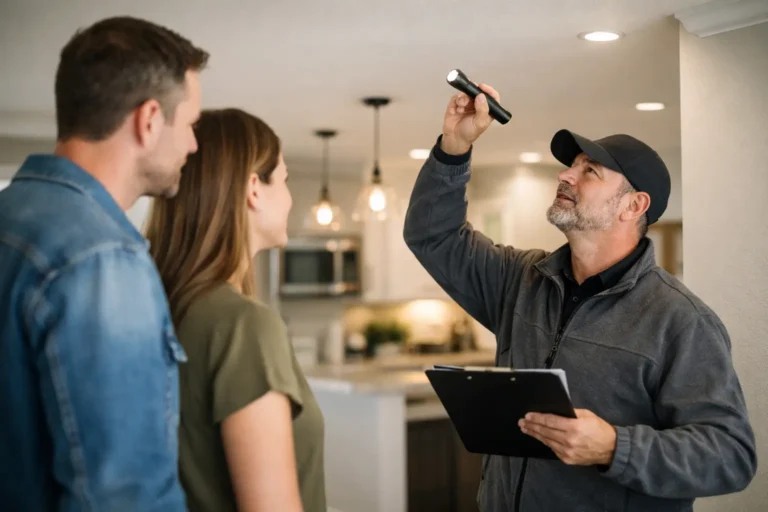
If you’re asking should I attend my home inspection, the short answer is yes – in most cases, you should. Not because you need to follow the inspector room to room or try to interpret every technical detail on the spot, but because being there helps you understand the house you’re about to buy. A report matters. Seeing issues firsthand matters more.
Buyers often treat the inspection like a formality. It isn’t. This is one of the few chances you get to hear, in plain language, how the home is actually performing before you close. You can learn where the risks are, what needs attention soon, and what is simply normal wear. That kind of clarity is hard to get from photos, seller disclosures, or a quick showing.
Should I attend my home inspection or just read the report?
Reading the report afterward is helpful, but it is not the same as attending. A good report documents defects, safety concerns, and maintenance items. What it cannot fully replicate is the context you get during the inspection itself.
When you attend, the inspector can show you that the grading slopes toward the foundation instead of away from it. You can see the staining under the bathroom sink, hear the furnace startup, and understand why a loose receptacle or double-tapped breaker matters. Those details are easier to grasp in person than on a screen later that night when you’re already trying to make a decision under deadline.
That said, attendance is useful when it is done the right way. You do not need to shadow the inspector from start to finish. In many cases, the best approach is to arrive near the end or join for the summary portion. That gives the inspector time to do the job thoroughly without interruption, while still giving you the benefit of a walkthrough of the most important findings.
Why attending the inspection helps buyers make better decisions
A home inspection is not pass or fail. That is one reason buyers get tripped up. They want a simple answer on whether the house is good or bad. Real homes do not work that way. Most properties have defects. The real question is whether those issues are manageable, negotiable, urgent, or expensive.
Being present helps you sort those categories out faster. An experienced inspector can explain the difference between an aging water heater that may need budgeting for in the next couple of years and an active moisture problem that needs immediate attention. Those are very different issues, even if both end up in the report.
It also helps with negotiation. If you have seen the roof condition, the cracked seal at the window, or signs of plumbing leakage yourself, you are better prepared to ask for repairs, request credits, or adjust your expectations. You are not negotiating from a place of confusion.
For first-time buyers, attendance can also reduce anxiety. A lot of buyers assume every defect means disaster. It doesn’t. A good inspector puts findings in order of importance and explains what is common, what is safety-related, and what deserves specialist follow-up. That kind of plain-English explanation can keep a transaction from being derailed by the wrong issue.
What you should do during the inspection
Show up ready to listen, not to perform your own inspection. This is where buyers sometimes make the process harder than it needs to be. Your job is not to climb ladders, test outlets, or diagnose foundation movement. Your job is to understand the home.
Ask practical questions. What needs attention first? What could become expensive if ignored? Which items are maintenance and which are defects? Is this issue typical for the home’s age? Those questions get you useful answers.
You should also pay attention to the basic systems and shutoffs. Learn where the main water shutoff is, where the electrical panel is located, how the furnace and air conditioning system appear to be functioning, and what routine maintenance the house will need. Even in a solid home, that information has value because you will own these systems soon.
If the inspector uses tools like thermal imaging, moisture testing, electrical testing, or roof photography, ask what those tools are confirming. You do not need a technical lecture. You do need to know whether hidden moisture, overheating electrical components, or roof wear is showing up in places you would never catch during a showing.
When attending may not make sense
There are cases where you may not be able to attend, and that does not automatically put you at a disadvantage. Relocation buyers, out-of-town purchasers, and people juggling work or childcare may not be available during the inspection window. Sometimes access rules in occupied homes also limit how much time buyers can spend onsite.
If you cannot attend, what matters is the quality of the communication. You need a clear same-day report, strong photos, direct explanations, and an inspector who will actually walk you through the findings afterward. The report should tell you what was found, why it matters, and what action to consider next. Vague language and bloated checklists do not help when you’re making a real financial decision.
In those situations, a post-inspection phone call can be the next best thing to being there. You should be able to ask, What are the top concerns? What should I budget for soon? Are there signs of active leakage, structural movement, unsafe wiring, or major mechanical issues? If the inspector cannot answer those questions clearly, that is a problem.
Should I attend my home inspection for a new build?
Yes, absolutely. New does not mean defect-free.
This is one of the biggest misconceptions buyers have. New construction can have grading issues, missing insulation, roof installation defects, plumbing leaks, incomplete electrical work, and cosmetic shortcuts hiding more serious workmanship problems. Tight schedules and multiple trades on site create plenty of room for things to be missed.
If you attend a new-build inspection, you get a better understanding of what still needs correction and what should be documented before closing. That can be especially useful if you are dealing with a builder walkthrough that feels rushed or overly polished. A third-party inspection gives you a more objective view of the home’s actual condition.
Common mistakes buyers make when they attend
The biggest mistake is talking too much and listening too little. Buyers sometimes arrive with a long list of cosmetic concerns from the showing and spend valuable time on minor issues while bigger items are being documented elsewhere. Paint touchups and sticky doors matter far less than moisture intrusion, unsafe electrical conditions, roof wear, or signs of structural movement.
Another mistake is expecting instant cost estimates for every defect. A home inspector can often tell you what is minor, moderate, or significant, but exact repair pricing usually belongs to the appropriate contractor. The better question is whether an issue is urgent, whether it needs specialist review, and whether it should affect your negotiation.
Finally, some buyers assume they must attend the full inspection to get value from it. Not true. In fact, many inspectors prefer to complete the inspection first and then walk the buyer through the key findings. That usually leads to better focus and better explanations.
The real value of being there
A home inspection is about reducing uncertainty. Attending helps because it turns the house from a listing into a real structure with real systems, maintenance needs, and possible risks. You stop guessing. You start making decisions based on evidence.
For buyers in competitive markets, that matters. Deals move fast. Emotions run high. It is easy to minimize defects when you love a home or panic when you see a long report. Being there gives you a steadier read on what is actually going on.
At JBR Inspections, that is the goal – not to overwhelm you, and not to sugarcoat anything. Just a clear look at the property, explained in plain English, so you know what you are buying and what comes next.
If you can attend your inspection, do it. Even 30 to 45 minutes at the end can give you more confidence than pages of notes ever will, and confidence is worth a lot when you’re making one of the biggest purchases of your life.