
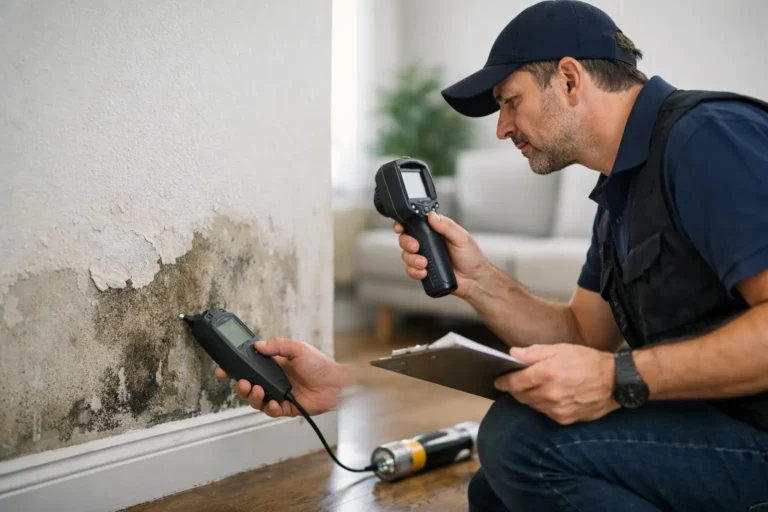
A stained basement baseboard or a musty smell in the attic usually tells buyers the same thing – water has been there before, and it may still be active. So, can a home inspection find moisture problems? Yes, often it can. But the honest answer is that it depends on where the moisture is, how long it has been there, and how thorough the inspection process really is.
Moisture is one of the most expensive issues a buyer can inherit. It can damage framing, insulation, drywall, flooring, windows, roofing materials, and foundation walls. It can also point to larger defects, like poor grading, plumbing leaks, roof failures, condensation problems, or weak ventilation. That is why moisture should never be treated as a minor cosmetic concern.
Can a home inspection find moisture problems in every case?
Not in every case, and any inspector who says otherwise is overselling it. A home inspection is a visual, non-invasive evaluation. That means inspectors do not open finished walls, remove flooring, or tear apart ceilings to chase hidden leaks. If moisture is trapped deep inside a wall cavity with no visible symptoms and no detectable temperature change, it may not show up during the inspection.
That said, a strong inspection can absolutely identify many moisture-related concerns before closing. The key is knowing what signs to follow and using the right tools to confirm what visual clues suggest. A rushed walkthrough may miss the warning signs. A careful inspection with thermal imaging and moisture testing gives buyers a much better shot at catching trouble early.
What a good inspector looks for
Moisture problems rarely appear as one obvious defect. More often, they leave a trail. An experienced inspector looks at the whole pattern, not just one stain or one damp corner.
In basements and crawlspaces, that means watching for efflorescence on concrete, water staining, rot at wood framing, rust on metal components, sump pump concerns, and grading issues outside that may direct water toward the structure. Around windows and doors, it means checking for failed seals, soft trim, swelling, staining, and signs that water may be entering at the exterior envelope.
In attics, moisture may show up as mold-like growth, compressed or wet insulation, darkened roof sheathing, frost patterns in colder months, or ventilation problems that trap humid air. Bathrooms, kitchens, and laundry areas get close attention too, because supply lines, drain lines, caulking failures, and poor exhaust can all create long-term damage that stays unnoticed until finishes start to fail.
Roofing matters here as well. Missing shingles, damaged flashing, poor penetrations, blocked gutters, and soft spots around roof transitions can all lead to moisture entry. On many homes, roof-related leaks are not obvious from the living space until the damage has been building for a while.
The tools that help find hidden moisture problems
This is where the difference between a basic inspection and a more thorough one becomes clear. Visual observation matters, but tools help confirm whether a suspicious area is active, historic, or likely tied to another issue.
Thermal imaging is one of the most useful tools because moisture often changes surface temperature. A cooler patch on a finished ceiling below a bathroom, for example, may suggest an active leak or elevated moisture. A cold corner in a basement may point to missing insulation, air leakage, or possible condensation. Thermal imaging does not see through walls like X-ray vision, and it does not prove moisture by itself. It highlights anomalies that deserve closer testing.
That is why moisture meters matter. A meter can help verify whether a material actually contains elevated moisture. If a thermal scan shows a suspicious area under a window and the meter confirms high readings in the drywall or trim, the buyer has much stronger evidence that the issue is real.
Roof photography can also help. High-resolution drone images can reveal damaged shingles, worn flashing, drainage issues, or roof areas that are not safely visible from the ground. When the roof is one of the main sources of water intrusion, better visibility matters.
Where home inspections often catch moisture issues
The most common trouble spots are not random. They tend to show up where water enters, where plumbing runs, or where humid air gets trapped.
Basements are near the top of the list, especially in regions with freeze-thaw cycles, snow loads, and seasonal drainage stress. Small cracks, poor exterior grading, short downspout discharge, and foundation seepage can all create recurring basement moisture. Sometimes buyers see a finished basement and assume everything behind the drywall is fine. That is a mistake. A finished basement can hide a long history of water entry.
Attics are another major problem area. In colder climates, attic moisture often comes from inside the house, not just from the roof. Warm, humid air escaping into the attic can condense on cold sheathing and framing. That can lead to staining, mold-like growth, and insulation damage. Poor bathroom fan venting is a common culprit.
Bathrooms, kitchens, utility rooms, and areas around water heaters also deserve close attention. Small plumbing leaks can do a lot of damage over time, especially when they drip into cabinets, subfloors, or wall cavities. Many of these leaks are slow enough that sellers may not notice them until materials start warping or odors develop.
What inspectors can miss, even when they do a solid job
Hidden moisture is still hidden. If a wall was recently painted, a basement was newly finished, or furnishings block a problem area, the evidence may be reduced or completely concealed. Dry weather can also make active leaks harder to detect. A roof that leaks during driving rain may look fine on a clear inspection day.
There is also the issue of timing. Some moisture problems are intermittent. Ice damming, seasonal condensation, and occasional plumbing backups may not leave obvious current evidence. A good inspector can often spot conditions that increase the risk, even if active moisture is not present at that moment. That distinction matters. Finding the risk factors can still protect the buyer.
This is one reason clear reporting matters so much. Buyers do not just need a note that says possible moisture observed. They need to know where it was found, what tool confirmed it, what damage may be tied to it, and what the next step should be.
What buyers should expect if moisture is found
If the inspector finds elevated moisture, the next question is not just where the water is. It is why it is there. Surface drying and fresh paint do not fix moisture problems. The source has to be identified and corrected.
Depending on the area, that could mean further evaluation by a qualified roofing contractor, plumber, foundation specialist, or restoration company. In some cases, the issue is straightforward, like a leaking toilet seal or disconnected downspout. In others, it is bigger, like repeated water entry at the foundation or widespread attic condensation tied to ventilation and air sealing defects.
For buyers, this information creates options. You may negotiate repairs, ask for documentation of past remediation, request a price adjustment, or decide the level of risk is too high. What matters is that you are making that decision with facts instead of finding out after move-in.
Why thorough moisture detection matters before closing
Moisture damage gets expensive fast because it tends to spread. A small roof leak can become rotten sheathing, damaged insulation, stained ceilings, and mold concerns. Minor basement seepage can turn into flooring replacement, drywall removal, and foundation work. A slow plumbing leak can quietly damage cabinets, subfloors, and adjacent finishes.
That is why a no-nonsense inspection process matters. At JBR Inspections, thermal imaging is included on every home, along with moisture testing and roof imaging, because too many costly problems are missed when inspectors rely on a quick visual pass alone. Buyers need more than a checklist. They need clear evidence and plain-English guidance.
If you are buying a home, treat any sign of moisture as worth understanding fully. Water has a way of turning small unanswered questions into expensive answers later.