
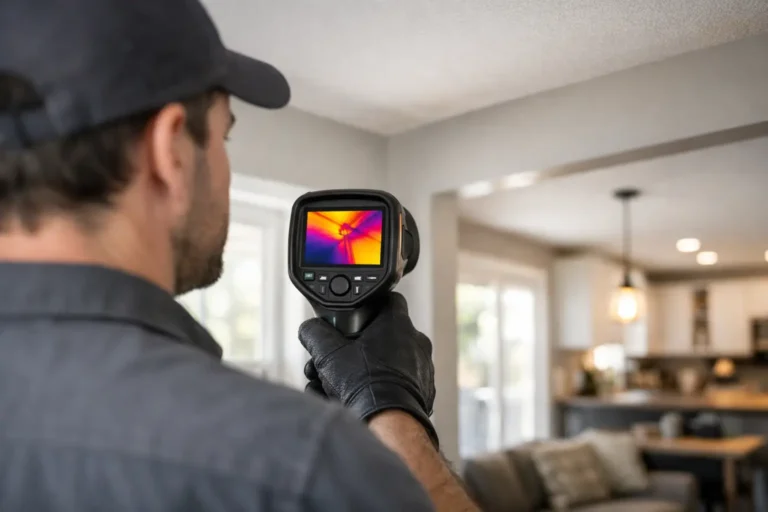
If a house looks clean, freshly painted, and move-in ready, that does not mean everything behind the walls is fine. A lot of costly problems do not show up in a standard walk-through. That is exactly why buyers ask, what does thermal imaging detect in a home inspection? The short answer is temperature differences that can point to hidden defects. The more useful answer is that it can help expose issues you would never see with the naked eye, especially when time is short and the stakes are high.
Thermal imaging does not see through walls like X-ray vision, and it does not diagnose a problem by itself. What it does is show patterns of heat and cold across surfaces. An experienced inspector uses those patterns, along with moisture testing, electrical testing, and the rest of the inspection, to figure out whether there is a real concern that needs your attention.
What does thermal imaging detect in a home inspection?
In practical terms, thermal imaging detects temperature anomalies. That means areas that are warmer or cooler than they should be. Those unusual patterns can suggest moisture intrusion, missing insulation, air leaks, overheating electrical components, HVAC performance problems, and in some cases plumbing concerns.
This matters because homes do not fail in obvious ways at first. Roof leaks can dampen insulation long before a ceiling stain appears. An overloaded electrical connection can heat up before it trips a breaker. A poorly sealed exterior wall can leak enough cold air to affect comfort and energy bills without drawing attention during a quick showing.
A thermal camera helps the inspector look beyond appearance. It gives context to what the eye alone cannot confirm.
Moisture intrusion is one of the biggest things thermal imaging can reveal
For most buyers, hidden moisture is where thermal imaging earns its keep.
Water changes temperature patterns. A damp area in a wall or ceiling often appears cooler than the surrounding material, depending on conditions inside and outside the home. That can help an inspector identify suspicious areas near windows, under bathrooms, around plumbing lines, below roof penetrations, or along basement walls.
The key point is that the camera is not proving there is water all by itself. It is identifying a pattern that may be consistent with moisture. A good inspector then verifies that finding with a moisture meter and a closer visual review.
That distinction matters. Not every cool spot is a leak. Sometimes it is simply missing insulation or air movement. But when a thermal image and moisture testing line up, you have a much stronger case that there is active or past water intrusion.
For buyers, that can mean the difference between a minor repair and a much larger problem involving mold growth, damaged framing, or repeated leakage hidden behind finished surfaces.
Missing insulation and heat loss often show up clearly
Another common answer to what does thermal imaging detect in a home inspection is insulation defects.
In colder climates, this is especially useful. Exterior walls, attic hatches, sloped ceilings, rim joists, and areas around recessed lights can all show abnormal heat loss. In summer, the same tool can help identify unwanted heat gain. Either way, the camera helps locate sections where insulation may be missing, compressed, installed poorly, or bypassed by air leaks.
That does not always mean the house has a major defect. Sometimes it points to an older home with uneven insulation standards. Sometimes it highlights an isolated repair area that was never properly closed up. But if a house has several thermal irregularities along exterior walls or ceiling transitions, that can affect comfort, efficiency, and your future utility costs.
For a buyer, this is not just about energy savings. Cold rooms, drafty corners, and uneven temperatures often signal building-envelope weaknesses that may need attention.
Air leaks around windows, doors, and penetrations
Not every problem involves water or insulation. Air leakage is another issue thermal imaging can help expose.
When outside air enters around window frames, door thresholds, attic access panels, plumbing penetrations, or poorly sealed ductwork, the surrounding materials often show a distinct temperature difference. That gives the inspector a visual clue that the home is leaking conditioned air.
These findings can range from minor maintenance items to signs of larger workmanship problems. A small draft at a weatherstripped door is one thing. Widespread leakage at multiple penetrations in an attic or upper-level ceiling can point to broader heat-loss issues and moisture risks tied to condensation.
For buyers trying to budget realistically, that matters. A home can be structurally sound and still underperform because of weak sealing and insulation details.
Electrical hot spots are another major benefit
One of the most valuable safety uses for thermal imaging is identifying abnormal heat in electrical components.
Loose connections, overloaded breakers, failing conductors, and imbalanced circuits can generate excess heat before there is visible damage. During a home inspection, a thermal camera can sometimes reveal hot spots at the electrical panel, disconnects, wiring terminations, or other accessible components.
This is where experience matters a lot. Electrical systems naturally generate some heat under load. The issue is whether that heat is abnormal for the component and the operating conditions at the time of the inspection.
A thermal image showing one breaker much hotter than the others does not automatically mean the house is unsafe, but it does raise a serious question. That kind of finding often justifies further evaluation or repair by a licensed electrician.
For buyers, this is one of the clearest examples of why thermal imaging is more than a nice extra. It can help catch a problem before it becomes a repair emergency.
HVAC and radiant heating issues can sometimes be spotted
Thermal imaging can also help an inspector evaluate how heating and cooling systems are performing, at least from a surface-temperature standpoint.
Supply registers that are not delivering expected conditioned air may show weaker thermal contrast than nearby vents. In-floor radiant heat can sometimes reveal uneven heating patterns that suggest flow issues, damaged sections, or areas not warming as expected. Duct leakage or poor distribution may also create visible temperature inconsistencies.
This does not replace full HVAC diagnostics. A thermal camera cannot tell you everything about a furnace, air conditioner, or boiler. But it can support other observations and help identify rooms or system areas that deserve closer attention.
What thermal imaging does not detect
This is where honest inspection matters. Thermal imaging is useful, but it has limits.
It does not automatically identify the exact cause of a temperature difference. It does not confirm mold, structural failure, or the full extent of hidden damage without supporting evidence. It also depends heavily on conditions at the time of the inspection.
If there is little temperature difference between indoors and outdoors, some defects are harder to see. If a leak has recently dried, the thermal pattern may be less obvious. If an electrical circuit is not under enough load, overheating may not show up. Furniture, storage, finished surfaces, and inaccessible spaces can also block or reduce what the camera can reveal.
That is why thermal imaging should be part of a thorough inspection, not a substitute for one. The camera is a tool. The value comes from how the inspector interprets what it shows and confirms it with other testing methods.
Why the inspector matters more than the camera
A thermal camera in the wrong hands can create confusion. Cold spots can be mistaken for leaks. Warm areas can be overcalled as electrical hazards. Buyers end up either panicked for no reason or falsely reassured.
A qualified inspector looks at thermal findings in context. They compare the image to the building layout, current weather, system operation, visible conditions, and direct testing results. If a suspicious pattern appears under a bathroom, the next step is not a guess. It is verification. If an exterior wall looks cold, the question is whether that is a draft, a missing insulation bay, or simply normal variation.
That no-nonsense approach is what makes thermal imaging useful in a real estate transaction. At JBR Inspections, thermal imaging is used on every home because hidden defects cost buyers real money, and surface-level inspections miss too much.
What buyers should take from thermal findings
The best use of thermal imaging is not fear. It is clarity.
If the inspection reveals likely moisture intrusion, you can push for repairs, request further evaluation, or adjust your budget before closing. If it shows insulation gaps or air leakage, you have a better sense of future comfort and efficiency improvements. If it identifies electrical hot spots, you can deal with a safety concern before it turns into a bigger problem.
Not every thermal finding is a deal breaker. Some are minor. Some are common in older homes. Some need monitoring rather than immediate repair. The point is that you are making a decision based on evidence instead of guesswork.
When you are buying a home, that is what you want from an inspection – clear information, honest interpretation, and fewer expensive surprises after the keys are in your hand.
A house can hide a lot behind drywall, insulation, and finished ceilings. Thermal imaging helps bring some of that into view, and that can give you the one thing every buyer needs before closing: a better chance to make a smart call.