
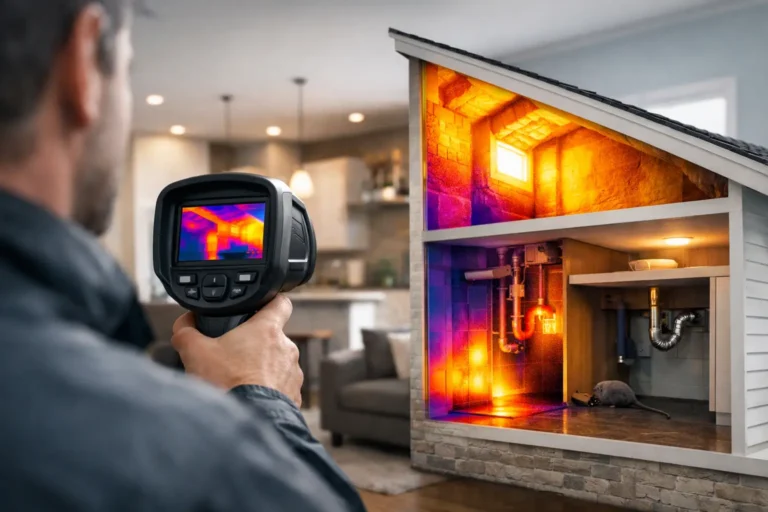
A wall can look perfectly clean while water is moving behind it. An electrical panel can appear normal while one connection is running hotter than it should. That is why buyers ask, what does thermal imaging reveal during a home inspection? In the right conditions, it reveals temperature differences that point an inspector toward hidden moisture, missing insulation, air leaks, overheating electrical components, and other issues worth investigating before you remove conditions.
Thermal imaging is not a magic camera that sees through every wall or diagnoses every defect. It is a practical screening tool. It helps identify areas that do not behave like the materials around them, so those areas can be checked further with moisture meters, electrical testing, visual inspection, and experience.
What Does Thermal Imaging Reveal During a Home Inspection?
An infrared camera translates surface temperatures into a color image. Warmer and cooler areas stand out, allowing an inspector to spot patterns that are easy to miss during a standard walkthrough. The camera does not see water, mold, wiring, or insulation directly. It sees the temperature effect those conditions may create.
That distinction matters. A dark, cool area on a ceiling may be moisture, but it could also be an air leak or a section of insulation affected by outdoor temperatures. A responsible inspector does not make a costly claim based on one image. The thermal scan identifies a concern, then the concern is verified where possible.
For Edmonton-area buyers, this is particularly useful. Cold winters, large indoor-outdoor temperature differences, snow loads, ice damming, and aging housing stock can expose weak points in a home’s exterior walls, attic insulation, roof system, and plumbing.
Moisture Behind Walls, Ceilings, and Floors
Moisture is one of the most valuable things thermal imaging can help uncover. Wet materials often change temperature more slowly than dry materials. Depending on conditions, a hidden plumbing leak, roof leak, window leak, or damp area below a bathroom may show as an irregular cool or warm pattern.
Common examples include a cool stain below a second-floor shower, an unusual pattern around a skylight, or a cold area at the base of a finished basement wall. The camera gives the inspector a reason to test that exact location with a moisture meter rather than guessing based on appearance alone.
This can be especially helpful when fresh paint, new flooring, or recently finished basement walls hide evidence of an older or active problem. It does not prove how long the moisture has been present or whether mold is inside the wall. It does give a buyer a clear reason to get answers before taking on the house and the repair bill.
Missing Insulation and Air Leakage
In Alberta, heat loss is not a minor comfort issue. Poor insulation and air leakage can mean cold rooms, drafts, ice buildup, high heating costs, and, in some cases, condensation that damages building materials over time.
Thermal imaging can reveal colder areas at exterior walls, attic hatches, rim joists, window openings, recessed lights, and around doors. It may show insulation gaps in a wall or ceiling, although confirmation can depend on access and the temperature difference between inside and outside.
Not every temperature variation means the insulation is defective. Furniture against a wall, sunlight on one side of the house, a recently operated furnace register, or a closed interior door can affect the image. An experienced inspector reads the whole pattern and considers the home’s construction, weather, and HVAC operation before reporting a concern.
Overheating Electrical Components
Electrical problems do not always announce themselves with sparks or flickering lights. A loose connection, overloaded circuit, failing breaker, or damaged component can create excess resistance. Excess resistance creates heat.
With the electrical system operating and the panel safely accessible, thermal imaging may identify unusually warm breakers, conductors, connections, receptacles, or service equipment. This does not replace electrical testing or an electrician’s diagnosis. It can, however, flag a potential safety issue that deserves prompt evaluation.
A warm component is not automatically unsafe. Some equipment normally runs warmer under load. What matters is whether one component is significantly hotter than similar components under similar conditions, and whether that temperature pattern matches other signs of a defect.
Plumbing and Heating Concerns
Thermal imaging can also support the inspection of plumbing and heating systems. Hot-water lines may be traced through accessible areas, and abnormal temperature patterns can sometimes help locate a suspected leak or identify a fixture that is not functioning as expected.
On heated floors, the camera may show whether heat is distributing across the expected area. Around furnaces and ducts, it can help identify heat loss, disconnected ductwork, or uneven airflow patterns. In a finished home, those clues can be useful because much of the system is hidden behind walls and ceilings.
Again, context controls the result. A duct may appear cool simply because the furnace was not running long enough. A pipe may not show clearly if it is deeply buried in insulation or if the temperature difference is too small. Thermal imaging works best as part of a full inspection, not as a standalone service.
What Thermal Imaging Cannot Tell You
A good inspection protects buyers from overconfidence as much as it protects them from hidden defects. Infrared technology has limits, and you deserve to understand them.
It cannot see through walls like an X-ray. It only reads the surface temperature of the material in view. It cannot reliably identify mold, determine the exact source of every moisture pattern, confirm the age of a leak, or tell you how much a repair will cost. It also cannot inspect areas that are blocked by furniture, stored belongings, finished surfaces, snow cover, or unsafe access conditions.
Weather can be a factor as well. Thermal scans are most revealing when there is a meaningful temperature difference between indoors and outdoors. Edmonton winter conditions often create excellent contrast for identifying insulation and air-leakage concerns, while mild weather may limit what can be seen. That does not make the inspection less valuable. It means findings must be interpreted honestly, based on the conditions present that day.
Why Buyers Benefit From Thermal Imaging
A standard home inspection is already designed to evaluate visible and accessible components. Thermal imaging adds another layer of information without opening walls or causing damage. It helps direct attention where it belongs.
For a buyer, that can change the conversation before closing. A suspected roof leak may justify asking for repair documentation or further assessment. Evidence of weak insulation may help you budget for upgrades instead of being surprised by cold bedrooms and high utility bills. A hot electrical connection may need immediate review by a qualified electrician before it becomes a safety risk.
The value is not in receiving a gallery of colorful images. The value is in receiving clear guidance: what was observed, how serious it may be, what should be investigated further, and what it could mean for your decision.
At JBR Inspections, thermal imaging is used on every home inspection because hidden concerns should not be left to chance. It is paired with moisture testing, electrical testing, a full visual review, and plain-English reporting. The goal is not to alarm you with every minor variation. The goal is to give you useful facts while there is still time to act.
When a Thermal Finding Needs Further Investigation
Some findings are straightforward, while others require a specialist. An active moisture reading near a roof penetration may call for a qualified roofer. A recurring basement-wall moisture pattern may need assessment by a foundation or drainage professional. An overheating breaker or connection should be evaluated by a licensed electrician.
The right next step depends on the evidence, the location, and the potential consequence of being wrong. A small insulation gap is usually a planning and comfort issue. Confirmed moisture near electrical equipment or significant structural components deserves faster attention.
Buying a home always involves decisions under pressure. A thorough inspection does not promise a perfect house, but it can replace assumptions with evidence. When an infrared scan points to a hidden concern, the best outcome is simple: you get the chance to ask the right question before the problem becomes yours.