
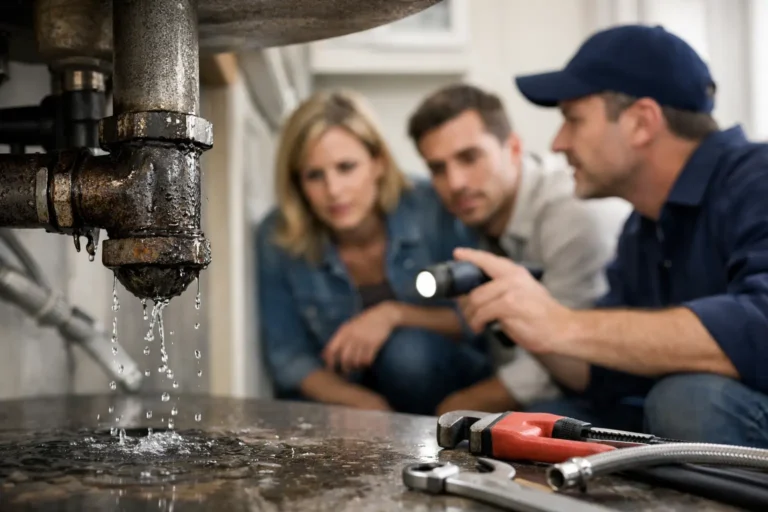
A home can look clean, updated, and ready for possession while a slow plumbing problem is quietly damaging a cabinet, wall, or foundation below the surface. That is why plumbing risks homebuyers should know are not limited to a dripping faucet or a toilet that runs. The costly issues are often hidden, intermittent, or easy to miss during a quick showing.
For Edmonton-area buyers, plumbing deserves special attention. Cold winters, aging housing stock, shifting soil, and renovation work completed by previous owners can all affect how water enters, moves through, and leaves a property. A proper home inspection helps put the visible evidence into context, but buyers should also understand where the biggest risks tend to sit.
Plumbing risks homebuyers should know before closing
1. Aging supply pipes and failing connections
Not all water pipes age the same way. Copper can develop pinhole leaks, older galvanized steel can corrode internally and restrict water flow, and some older plastic piping materials have known performance concerns depending on their age, installation, and condition. Even newer piping can fail at poorly installed fittings, shutoff valves, or connections behind appliances.
The problem is not always obvious from a sink cabinet. A pipe may be slowly leaking inside a finished wall, below a bathroom floor, or in a mechanical room where stored items hide the damage. Staining, swollen trim, corrosion at valves, mineral deposits, and unexplained moisture are all clues worth taking seriously.
A home inspection can identify visible pipe materials and accessible signs of deterioration. It cannot see every concealed run of plumbing without opening walls, which is why visible clues and moisture testing matter. If the evidence points to an active or recurring leak, the right next step may be a plumbing specialist rather than assuming it is a minor repair.
2. Poly-B piping deserves a closer look
Many homes built from the late 1970s through the 1990s may contain polybutylene, commonly called Poly-B, water supply piping. Its presence does not automatically mean a house is a bad purchase. However, buyers need to know what they are looking at, where it is installed, how it has performed, and whether fittings or visible sections show concerns.
This is a risk that calls for clear information, not panic. Replacement costs can vary widely based on the size of the home, whether pipes run through finished spaces, and how much drywall or ceiling access is required. Knowing about Poly-B before conditions are removed gives a buyer time to discuss the issue with their agent, seek further evaluation, and budget accurately.
3. Hidden leaks around tubs, showers, and toilets
Bathrooms are high-use areas with many possible failure points. A loose toilet, a deteriorated wax ring, cracked grout, failing caulk, or a leaking shower valve can allow water to travel under finished flooring and into framing. By the time the ceiling below develops a stain, the moisture damage may have been present for much longer.
Watch for soft flooring near toilets, staining on the ceiling under a bathroom, loose fixtures, damaged baseboards, or a persistent musty smell. These conditions do not always prove an active plumbing leak. They do justify a closer look because the repair could range from resealing a fixture to replacing damaged subfloor, drywall, or framing.
Thermal imaging and moisture testing can help identify temperature differences and elevated moisture in accessible areas that may not be visible to the eye. They are valuable tools, but they are not magic cameras that see through every wall. A good inspector explains what the findings show, what remains uncertain, and what should be investigated before closing.
4. Sewer line problems can become a major expense
The sewer line is easy to forget because it is buried underground. It is also one of the most expensive plumbing components to repair when it fails. Older lines may be affected by tree roots, cracked sections, offset joints, settling, grease buildup, or deteriorating materials. A line can appear to drain normally during a short inspection and still have defects that only a sewer camera evaluation will reveal.
Pay attention to slow drains, gurgling fixtures, sewage odors, past backup disclosures, unusually lush patches of lawn, or signs that a drain cleanout has been used frequently. None of these automatically confirm a damaged sewer line, but they are reasonable grounds to recommend a camera scope by a qualified drain contractor.
This is especially relevant when purchasing an older Edmonton-area home. Replacing or excavating a sewer line can disrupt landscaping, driveways, sidewalks, and finished basement areas. Spending money on further evaluation before closing is often far less painful than discovering a blocked or collapsed line after moving in.
5. A sump pump is not a set-it-and-forget-it system
In homes with basements, the sump pump is part of the defense against groundwater entering the foundation area. Buyers should confirm that a sump system is present where expected, appears properly installed, and discharges water away from the home. A disconnected hose, a blocked discharge line, poor exterior grading, or a failed pump can leave a basement vulnerable during heavy rain or spring melt.
A pump may operate during an inspection and still be near the end of its service life. It may also depend on household power at the exact moment a storm causes an outage. For that reason, the discussion should include the age and condition of the pump, the discharge location, and whether a backup system may be appropriate for the property.
The trade-off is simple: not every home needs the same level of backup protection. A home with a dry history, favorable grading, and a reliable system presents a different risk than a property with prior moisture concerns or a low-lying lot. The point is to understand the system you are inheriting.
6. Water heaters can fail suddenly
A water heater does not have to stop producing hot water to be a concern. Corrosion around fittings, rust at the tank base, an aging temperature-pressure relief valve, improper venting on gas units, or an outdated installation can all matter. When a tank fails, the result can be anything from a planned replacement to a significant water release in a finished basement.
The age of the unit is useful, but it is not the whole story. Some heaters last longer than expected with good conditions and maintenance; others fail earlier. Buyers should look at the installation as a whole, including visible leakage, drain pan provisions where applicable, venting, combustion air, and whether the unit is approaching a reasonable replacement window.
An inspection report should make the distinction clear: a unit that is old is not necessarily failed, but an older unit is a budgeting item. That gives buyers a practical basis for deciding whether to request a credit, negotiate a repair, or plan for replacement after possession.
7. Low water pressure may signal more than a minor inconvenience
Low pressure at one fixture can be a clogged aerator or a partially closed valve. Low pressure throughout the house can point to more significant issues, including corroded piping, a failing pressure regulator, a supply-line problem, or plumbing alterations that were not properly completed.
Water flow should be checked at representative fixtures during an inspection, along with visible supply lines and shutoff valves. If pressure is inconsistent, the answer depends on the evidence. A simple fixture repair is very different from widespread pipe restriction, and buyers should avoid accepting a vague explanation without identifying the likely cause.
8. Poor drainage and exterior water management affect plumbing too
Plumbing risk does not begin and end inside the walls. Downspouts that discharge beside the foundation, poor grading, leaking exterior hose connections, and improperly directed sump discharge can all put unnecessary water near the home. That water can contribute to basement moisture, foundation movement, and overworked drainage systems.
Buyers often focus on the kitchen and bathrooms because those are the obvious plumbing areas. The smarter approach is to follow the water: where it comes into the house, how it is controlled, where it is used, and where it goes after it leaves. A problem at any point in that path can create a costly surprise.
How to use inspection findings without overreacting
A home inspection is not a pass-or-fail test, and no honest inspector should present it that way. Nearly every home has plumbing maintenance items. The goal is to separate routine repairs from conditions that could affect safety, insurance, negotiating position, or the real cost of ownership.
When plumbing findings appear in your report, ask three practical questions. Is there evidence of active leakage or damage? Does the condition need a specialist evaluation before your contingency period ends? What is the likely financial exposure if the repair is delayed? Clear answers help you make decisions without treating every older valve or cosmetic stain as a deal-breaker.
At JBR Inspections, the focus is on giving buyers plain-English findings they can act on, not burying them in an oversized report. Visible plumbing concerns, moisture readings, system age, and signs of hidden damage should be explained in terms of what they mean for your purchase decision.
Before you remove conditions, give plumbing the same attention you would give the roof, electrical panel, or foundation. A few well-timed questions and the right follow-up can turn an expensive unknown into a repair plan you can negotiate, budget for, and handle with confidence.