
A roof can look fine from the driveway and still be one of the most expensive problems in the deal. That is why buyers ask how to spot roofing issues before buying a house before they commit, not after the first leak shows up. A quick glance at the shingles is not enough. You need to know what the roof is telling you, what it might be hiding, and when a small defect is actually a budget-changing problem.
In Edmonton and surrounding areas, roofs take a beating. Snow load, freeze-thaw cycles, wind, ice damming, and short repair seasons all add wear faster than many buyers expect. A roof does not have to be actively leaking to be near the end of its service life, and that difference matters when you are deciding whether to move forward, renegotiate, or ask better questions.
How to spot roofing issues before buying a house from the ground
Start with what you can safely see. You do not need to climb onto the roof, and you should not. Many of the early warning signs show up from the yard, driveway, or upper windows.
Look first for the overall shape. The roofline should appear straight and consistent. If you see visible sagging, dips, or uneven sections, that can point to structural movement, long-term moisture damage, or compromised roof decking. A sag is not a cosmetic issue. It is a reason to slow down and get a closer evaluation.
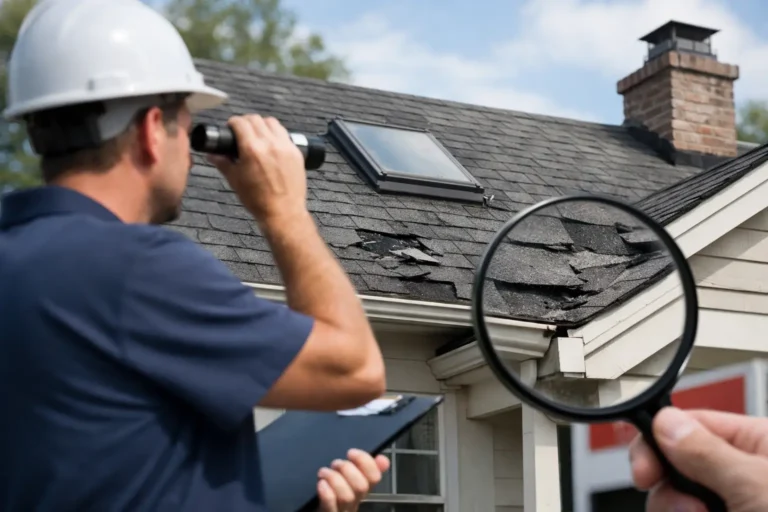
Next, scan the shingles or roofing material itself. On asphalt roofs, watch for curling edges, bald spots where granules have worn away, cracked tabs, patchy color changes, and shingles that do not lie flat. These signs often mean age, weather damage, or poor ventilation. If one section looks noticeably newer than the rest, that may mean a repair was done after a leak or storm event. Repairs are not automatically a problem, but they should lead to more questions.
Also check the gutters and downspouts. If you see heavy granule buildup in the gutters, the shingles may be deteriorating. Gutters that pull away from the fascia can also suggest rot in the roof edge or water management problems that have been ignored.
The roofing trouble spots buyers miss most often
The field of the roof gets the attention, but the problem areas are usually at the transitions. Flashing around chimneys, plumbing vents, skylights, dormers, and wall intersections is where many leaks begin. From the ground, look for metal flashing that appears loose, rusted, heavily caulked, or improvised. Fresh caulking around flashing is not proof of a good repair. Sometimes it is the sign of a recurring leak that someone tried to patch quickly.
Pay close attention to valleys, where two roof slopes meet. Valleys handle a high volume of water and snow melt. If shingles in the valleys are worn, buckled, or visibly patched, that area deserves a closer look.
Roof penetrations also matter. Vent boots around plumbing stacks can crack with age. If those seals fail, water can get in around the opening and stain insulation, decking, or ceilings long before a major interior leak becomes obvious.
Then there is the roof edge. Damaged drip edge, stained soffits, peeling fascia paint, and dark streaking near the eaves can point to ongoing moisture exposure. In colder climates, ice damming at the lower edge of the roof can cause water to back up under shingles and into the home.
What interior signs say about the roof
If you are serious about how to spot roofing issues before buying a house, do not stop outside. Some of the clearest clues are indoors.
Start at the ceilings. Water stains, patched drywall, fresh paint in isolated areas, bubbling texture, and hairline cracks can all indicate past or present roof leakage. Buyers sometimes assume a stain is old and already dealt with. Maybe it is. Maybe it is not. What matters is whether the source was identified and properly repaired.
In the attic, the picture gets clearer. If accessible, look for dark staining on the underside of the roof sheathing, mold-like growth, damp insulation, rusted nails, or visible daylight coming through where it should not. A musty smell can also point to chronic moisture issues. Not every attic stain means an active leak, but it always deserves context.
Ventilation matters here too. Poor attic ventilation can shorten the life of the roof by trapping heat and moisture. That can lead to premature shingle failure, frost buildup in winter, and condensation problems that mimic roof leaks. To a buyer, the distinction matters because the fix may involve more than just replacing shingles.
Age matters, but condition matters more
Buyers often ask for the roof age as if that alone settles the issue. It helps, but it is not enough. A 10-year-old roof installed poorly may perform worse than a 15-year-old roof installed correctly and maintained well.
Ask when the roof was last replaced, what material was used, whether permits were required, and whether receipts or warranty information are available. If the seller says the roof is “newer,” ask what that means. Two years old and twelve years old are both “newer” compared to the original roof on an older house.
Material type changes the calculation too. Architectural asphalt shingles, basic three-tab shingles, metal roofing, and low-slope membrane systems all age differently and fail in different ways. The right question is not just how old the roof is. It is how much useful life is realistically left and what signs of failure are already present.
When a roof issue is a negotiation issue
Not every roofing defect should kill a deal. Some are maintenance items. Some are repairable without major cost. Others point to broader water intrusion that can affect insulation, sheathing, interior finishes, and even structural components.
A few missing shingles after a wind event may be straightforward. Widespread shingle deterioration, repeated patching, soft decking, active leaks, or evidence of long-term attic moisture are different. Those issues can justify repair requests, credits, or a revised budget before closing.
This is where buyers get into trouble by underestimating scope. A visible patch is rarely just a patch if water has been entering for months. Roofing costs can escalate fast once decking replacement, insulation damage, ventilation upgrades, or fascia repairs are involved. The roof itself may only be part of the bill.
Why a proper inspection beats a seller disclosure
Seller disclosures can be helpful, but they are not a roof inspection. Sellers may not know the full history of the roof, especially if they bought the home recently or if repairs were handled by previous owners. Some defects are simply not visible during a casual showing.
A thorough inspection gives you a more objective read on current condition. That is especially true when the inspection includes better roof access and documentation, such as drone photography, moisture testing, thermal imaging, and attic evaluation. Those tools do not replace judgment, but they do help reveal details buyers would otherwise miss.
For buyers under deadline, clarity matters more than volume. You do not need a bloated report full of vague warnings. You need to know what was found, how serious it is, what it may cost you, and whether it changes the decision.
A practical way to assess roof risk before you buy
Treat the roof as a system, not a surface. Look at exterior condition, flashing details, drainage, attic signs, ventilation, and interior staining together. One isolated issue might be minor. Several smaller clues pointing in the same direction usually mean there is a larger story.
If the house is older, if the roof looks patched, or if weather conditions make visibility difficult, get professional eyes on it before you remove conditions. That is not being picky. It is basic risk management. A roof replacement is expensive enough. Hidden water damage behind ceilings and inside attic spaces is where buyers really get burned.
At JBR Inspections, that is exactly why roof evaluation is treated as a core part of the inspection, not a quick look from the lawn. Buyers need clear evidence, plain-English findings, and enough detail to act on while the deal is still negotiable.
The best time to find a roofing problem is when it is still someone else’s house.