
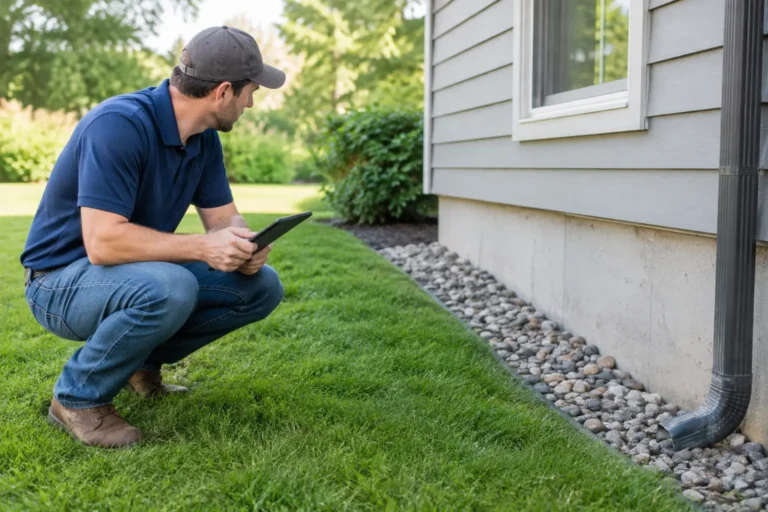
Water does not need a flooded basement to cause a serious problem. A yard that directs water toward the house can keep foundation walls wet for months, strain sump systems, damage finishes, and create expensive repairs that do not show up during a quick showing. Knowing how to evaluate grading drainage gives buyers a practical way to spot risk before they remove conditions.
Why grading and drainage matter to buyers
Grading is the shape and slope of the land around a house. Drainage is where rainwater, snowmelt, and roof runoff go after they reach that land. When both are working properly, water moves away from the foundation and disperses safely across the property or into an approved drainage system.
When they are not, water collects beside the home. In Edmonton and surrounding communities, that matters even more after heavy rain, spring thaw, and freeze-thaw cycles. Water can enter through foundation cracks, window wells, poorly sealed utility penetrations, or below-grade walls. It can also saturate soil around the foundation, creating conditions that contribute to movement, dampness, mold growth, and a constantly running sump pump.
A drainage concern is not automatically a reason to walk away from a property. Many issues are correctable with soil, downspout extensions, or targeted landscaping work. The key is separating a manageable maintenance item from evidence that water has already caused damage.
How to evaluate grading drainage during a walkthrough
Start outside, before you get drawn into the kitchen finishes and floor plan. Walk the entire perimeter of the home and look at the relationship between the soil and the foundation wall. You are not trying to diagnose every issue on the spot. You are looking for clear signs that water may be headed in the wrong direction.
Check the slope next to the foundation
The ground should generally slope down and away from the house. A useful rule of thumb is about six inches of fall over the first 10 feet from the foundation, where site conditions allow it. The exact layout will vary by lot, landscaping, sidewalks, and neighboring properties, but the basic goal does not change: water should not be encouraged to sit against the home.
Look closely at the first few feet beside the wall. Soil that is flat, sunken, or visibly angled toward the foundation deserves attention. Be especially cautious where mulch beds, decorative rock, patio edges, or garden borders trap water against the house. Landscaping can look tidy while still creating poor drainage.
Also check whether the soil level is too high against siding, brick veneer openings, or window frames. Raising the grade to create a slope is not a proper fix if it covers components that need to remain exposed. Water management must be balanced with proper clearance and protection of the building exterior.
Follow the downspouts
Roof runoff can unload a surprising amount of water beside a foundation. Check every visible downspout and ask one simple question: where does the water go?
A downspout that ends directly at the corner of the house is a common concern. Extensions should carry water away from the foundation, without discharging onto a walkway, neighboring property, or an area where it will simply run back toward the home. Buried downspout lines can be effective, but they cannot be assumed to work just because they disappear underground. Look for standing water near their discharge points, soil erosion, or downspouts that appear disconnected or crushed.
Pay attention to roof valleys as well. A valley concentrates runoff onto one section of the roof and gutter. If that gutter overflows or the downspout is poorly directed, one corner of the foundation may receive far more water than the rest of the house.
Watch for low spots and surface clues
Low areas in the yard are not always a defect. Some lots are designed with swales, shallow channels that direct water between homes or toward a drainage route. The issue is whether those low spots move water away from the building or hold it beside the building.
Look for depressions near foundation walls, patios, steps, decks, and window wells. Stained concrete, moss, algae, eroded soil, settled pavers, and thick mud are all clues that water regularly travels or collects there. If you are viewing the home after rain, puddles are useful evidence. Do not dismiss them as a one-time weather event without considering the shape of the surrounding grade.
A sloping driveway can also be a concern. If it directs runoff toward an attached garage, the garage floor, door seals, drains, and adjacent foundation area should be examined closely. Water entering a garage may remain a contained maintenance issue, or it may be a sign that drainage design is working against the house.
Inspect window wells, walks, and patios
Window wells should be clear, properly drained, and maintained so water cannot build up against below-grade windows. Debris, heavy soil, damaged covers, or a visibly flooded well increase the risk of leakage. A window well full of leaves can hide a drain problem until the next major storm.
Patios and sidewalks should generally slope away from the home. Concrete that has settled toward the foundation can send water directly to the wall. Small settlement may be repairable through lifting, sealing, or replacement, but it should not be ignored if it is paired with basement moisture stains or foundation movement.
Decks can conceal drainage conditions. If access is limited, note it. Water may be pooling below the deck where you cannot see it, particularly if the deck sits close to grade and blocks maintenance of the area behind it.
Look inside for confirmation
The exterior tells you where water may be going. The basement or lower level can reveal whether it has become a building problem.
Check foundation walls, finished basement baseboards, storage areas, and mechanical rooms for moisture staining, peeling paint, efflorescence, musty odors, warped flooring, or patched wall areas. Efflorescence is the white, chalky mineral deposit left behind when water moves through masonry or concrete. It does not prove active leakage, but it is evidence that moisture has been present.
A sump pit should be accessible and evaluated as part of the inspection. A sump pump is common in many homes and is not a defect by itself. What matters is whether it appears operational, whether the discharge is routed appropriately, and whether the surrounding conditions suggest the system is being asked to do too much.
Be careful with fresh paint, new flooring, or neatly finished basement walls. These updates may be completely legitimate, but they can also limit what is visible. A thorough home inspection may include moisture testing and thermal imaging to identify areas that warrant closer attention, though no inspection can see through every finished surface or predict every future water event.
Understand the lot, not just the house
Drainage is a property-wide issue. Look uphill, downhill, and toward adjacent homes. A house at the bottom of a slope may receive runoff from multiple yards. A newly built fence, retaining wall, shed, or landscaping project can alter where water travels. Even a neighbor’s downspout or a blocked shared swale can affect conditions on the lot you are buying.
Newer construction deserves the same scrutiny as an older home. Fresh sod and new landscaping can hide low areas, and soil commonly settles after construction. Older properties may have mature trees, settled concrete, and decades of landscaping changes that have gradually changed drainage patterns.
Ask the seller about prior water entry, grading repairs, sump pump replacement, drainage work, and insurance claims where disclosure rules require it. Their answers should be considered alongside visible conditions and the inspection findings, not in place of them.
When a drainage issue becomes a negotiation item
Minor grading corrections are often routine maintenance. Extending downspouts, cleaning eavestroughs, regrading a small section of soil, and repairing a damaged window well cover are typically straightforward tasks. Still, the cost and scope can change quickly when the problem involves broad lot drainage, settled concrete, a failing buried drain line, retaining walls, or evidence of foundation water intrusion.
Treat drainage as a larger concern when you see active moisture, recurring basement staining, significant settlement toward the house, erosion exposing foundation areas, damaged finishes, or a history of water entry. At that point, ask for further evaluation by an appropriate drainage, foundation, or landscaping specialist. A specialist can determine the repair approach and provide a more reliable cost estimate before you make a final decision.
For buyers, the value of the home inspection is clarity. A good report should identify what was observed, explain why it matters, and distinguish between maintenance, repair, and conditions needing further review. You do not need a perfect yard. You need an honest understanding of where water goes and what that could mean for the home you are about to buy.
Before closing, take one more slow walk around the exterior. Follow the roof runoff, study the slope at the foundation, and picture the property during spring melt and a hard summer rain. That five-minute exercise can reveal the questions worth asking before they become your repair bill.