
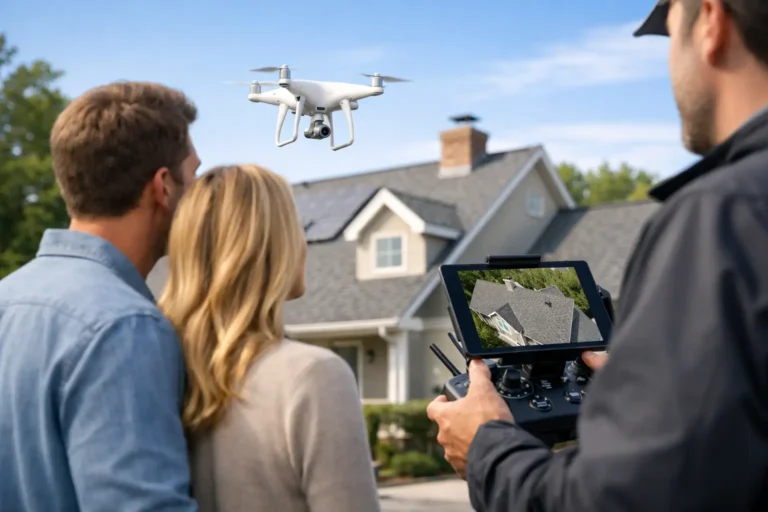
A roof can look perfectly fine from the driveway and still be carrying problems that cost thousands of dollars after possession. That is how drone roof inspections help: they give homebuyers a close, documented view of roof areas that are difficult or unsafe to assess from the ground or a ladder.
For buyers in Edmonton and surrounding communities, that matters. Our weather is hard on roofing. Wind, hail, freeze-thaw cycles, ice buildup, and heavy snow can shorten the useful life of shingles, damage flashing, and expose weak points around vents and chimneys. A proper inspection should not leave you guessing about one of the home’s most expensive protective systems.
A Better View of the Roof Before You Buy
A drone equipped with a 4K camera can capture detailed overhead and angled images of the roof surface, valleys, ridge lines, vents, flashing, gutters, and hard-to-see transitions. Those images allow the inspector to evaluate visible conditions without walking on the roof and potentially causing damage or taking unnecessary safety risks.
From the ground, an inspector may see general shingle wear, staining, or a sagging gutter. Drone photography can reveal whether missing shingles are isolated or widespread, whether flashing has lifted around a vent stack, or whether a valley is collecting debris and holding moisture. It turns a distant visual impression into evidence you can review.
That distinction is especially useful when you are comparing homes or deciding how much repair risk you are willing to accept. A roof does not need to be brand new to be acceptable. But you should know whether it appears to have years of service left, needs maintenance soon, or shows signs that replacement may be approaching.
What a Drone Can Help Identify
Drone photography is not an excuse for vague reporting. Its value is in supporting clear, specific findings. During a roof inspection, visible concerns may include damaged or missing shingles, exposed fasteners, deteriorated sealant, lifted flashing, cracked vent boots, loose ridge caps, damaged chimney areas, and blocked or poorly sloped gutters.
The images can also help identify patterns. For example, scattered shingle granules or minor edge wear may point to normal aging. Damage concentrated on one side of the roof could suggest wind exposure. Multiple patched areas, curling shingles, or uneven roof lines may warrant a closer conversation about past repairs, installation quality, or remaining roof life.
A drone cannot see through roofing materials, and it cannot confirm every source of a leak. That is why roof findings should be considered alongside interior observations, moisture testing, attic conditions when accessible, and thermal imaging. A stain on a ceiling does not always mean an active roof leak, but it should never be brushed aside without looking for the cause.
Why Roof Photos Matter in a Real Estate Deal
A home inspection report should help you make decisions, not leave you with a long list of technical terms. Clear drone images give buyers, agents, sellers, and contractors a shared view of the issue. Instead of saying the roof has “possible concerns,” the report can show a lifted shingle, exposed flashing, or damaged vent area and explain what that condition may mean.
That makes inspection findings more useful during negotiations. If the roof shows localized damage, you may ask for a repair, seek a credit, or obtain a contractor estimate before removing conditions. If the roof appears near the end of its expected service life, you can factor a future replacement into your purchase budget rather than treating it as a surprise after closing.
The right response depends on the property and the market. A few damaged shingles on an otherwise serviceable roof may be a straightforward maintenance item. Widespread deterioration on an older roof is a different financial conversation. The goal is not to make every finding a deal-breaker. The goal is to make sure you understand the risk before the home becomes yours.
Safer Access, Less Guesswork
Not every roof should be walked. Steep slopes, wet surfaces, fragile materials, snow cover, and limited access can make a physical roof walk unsafe or inappropriate. Walking on aged shingles can also cause damage, particularly in cold conditions when materials are brittle.
Drone inspection allows the roof to be documented in many of these situations without putting anyone at unnecessary risk. It is also useful on homes with complex rooflines, tall rear elevations, detached garages, and areas blocked by landscaping or fencing.
There are limits. Heavy rain, high wind, fog, poor light, or active snowfall can reduce image quality or prevent a safe drone flight. Snow cover can hide shingle condition altogether. In those cases, a good inspector should explain what was and was not visible, rather than pretending a hidden surface was fully evaluated. Honest limitations are part of a trustworthy inspection.
Drone Images Are One Part of a Thorough Inspection
A roof is more than the shingles you can see from above. Water can enter through a roof penetration, travel along framing, and appear inside the home far from the original opening. That is why the strongest assessment combines exterior roof images with the rest of the house.
An inspector should look for evidence inside as well: ceiling stains, damaged drywall, attic moisture, inadequate ventilation, insulation issues, and signs of past repairs. Thermal imaging can help identify temperature differences that may point to moisture or air leakage, while moisture testing helps determine whether a suspicious area is actively wet. Neither tool replaces professional judgment, but together they provide a much clearer picture.
At JBR Inspections, 4K drone roof photography is included on every property because the roof should not be an afterthought. It is part of the same practical approach used for thermal imaging, moisture testing, electrical testing, and clear same-day reporting. Buyers need useful information while they still have time to act on it.
Questions Buyers Should Ask About Roof Findings
When a roof issue appears in an inspection report, focus on practical questions. Ask whether the condition appears isolated or widespread, whether active leakage was observed, whether there is visible interior impact, and whether prompt repair or replacement planning is recommended.
It also helps to ask what evidence supports the finding. Good photos make this easier. You should be able to see the concern and understand why it matters, even if a roofing contractor is needed to determine the exact repair method and cost.
Be careful with overly precise remaining-life estimates. Roof lifespan depends on material, installation quality, sun exposure, ventilation, maintenance, weather events, and prior repairs. An inspector can identify visible aging and risk indicators, but a roof does not come with a countdown clock. Treat estimates as planning guidance, not a guarantee.
Make the Roof Part of Your Buying Decision
Buyers often spend most of their attention on kitchens, layout, and finishes. Those things are easy to see and easy to imagine living with. The roof is less exciting, but it protects nearly everything beneath it. A problem there can lead to interior water damage, mold concerns, damaged insulation, and unexpected repair bills.
Before you finalize a purchase, ask to see the roof evidence, not just a general statement that the roof was inspected. Detailed drone photos can give you the clarity to negotiate where necessary, set aside realistic repair funds, or move forward knowing the condition has been properly assessed.
The best inspection outcome is not a spotless report. It is a clear understanding of the home you are buying, including the costly problems that should never be left out of sight.