
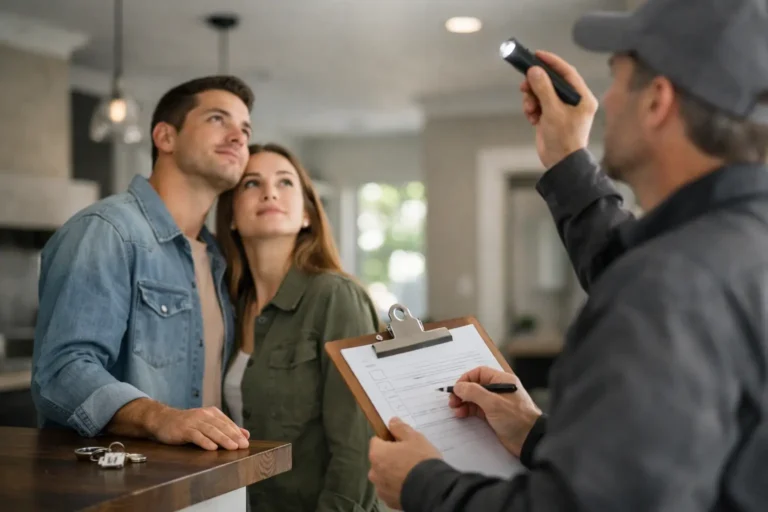
You can like the kitchen, picture your furniture in the living room, and still miss the problem that costs you $12,000 six months after closing. That is why a first time home buyer inspection checklist matters. It keeps your attention on the parts of the house that actually affect safety, repair costs, and your negotiating position.
For most buyers, the hard part is not caring enough. It is knowing where to look and what deserves concern. A clean showing does not mean a healthy house. Fresh paint can hide moisture staining. A tidy utility room can still contain an aging furnace, unsafe wiring, or active plumbing leaks. The goal of an inspection is not to find a perfect home. It is to understand the true condition of the one you are about to buy.
What a first time home buyer inspection checklist should do
A good checklist is not just a list of components. It should help you separate cosmetic flaws from meaningful defects. Scratched flooring and worn caulking are one thing. Foundation movement, roof deterioration, electrical hazards, and water intrusion are something else.
It should also help you think in three buckets: immediate safety issues, near-term repair costs, and longer-term maintenance planning. That distinction matters. Some findings justify repair requests or further evaluation before closing. Others simply tell you what to budget for after move-in.
Start outside, because water usually does
Many expensive problems begin on the exterior. If water is not managed properly outside the home, it has a way of showing up in basements, crawlspaces, attics, wall cavities, and around windows.
Begin with the grading around the house. The ground should slope away from the foundation, not toward it. If soil, mulch, or hardscaping directs water back to the home, that is worth attention. It does not guarantee a wet basement, but it raises the risk.
Look at gutters and downspouts next. Are they securely attached, free of obvious damage, and extending water away from the home? A missing downspout extension is a small item on paper, but over time it can contribute to serious moisture problems.
Roof condition also belongs near the top of your checklist. Missing shingles, exposed fasteners, sagging areas, damaged flashing, and aging materials can all point to leaks or shortened roof life. Roofs are one of the costliest systems to replace, so vague guesses are not good enough. This is where detailed roof documentation, including drone photography, can give buyers a much clearer picture than a quick glance from the driveway.
Windows, doors, siding, and trim matter for the same reason. You are looking for signs that the building envelope is no longer keeping water out effectively. Cracked sealant, rotted trim, staining, and damaged cladding do not always mean a crisis, but they should not be brushed off.
Pay close attention to the structure
First-time buyers often worry most about finishes because those are easy to see. Structural concerns are different. They may be subtle, but they carry more weight.
Inside and outside the home, watch for large foundation cracks, sloping floors, doors that do not latch properly, separated trim, and stair-step cracking in masonry. None of these signs should be diagnosed by guesswork during a showing, but they can signal settlement or movement that needs closer evaluation.
Some movement is minor and common in certain homes. Some is not. The point of your checklist is not to turn you into an engineer. It is to make sure structural red flags are not ignored because the house looks updated.
The major systems deserve more attention than the finishes
If you remember one thing from this first time home buyer inspection checklist, make it this: kitchens and bathrooms sell houses, but mechanical systems drain budgets.
The furnace, air conditioning system, water heater, electrical panel, plumbing supply lines, and drainage piping deserve a hard look. Ask the age of each system. Ask whether it has been serviced. Ask whether there is visible corrosion, leakage, improper venting, or amateur repair work.
An older furnace is not automatically a deal breaker. The same goes for an aging water heater or air conditioning unit. What matters is condition, installation quality, and expected remaining life. Buyers get into trouble when they assume old means fine because it is still operating on inspection day.
Electrical issues also deserve zero casual thinking. Open junctions, double-tapped breakers, outdated panels, reversed polarity, missing GFCI protection, and improper wiring methods can all create safety concerns. These are not cosmetic defects. They affect how safely the home functions.
Plumbing is another area where hidden problems can become expensive fast. Look for water stains under sinks, active leaks at shutoffs, slow drains, signs of previous repairs, and the type of supply piping present. Depending on the material, the age and failure risk may change your maintenance budget significantly.
Don’t skip moisture, insulation, and ventilation
A house can look dry and still have a moisture problem. That is why smart buyers pay attention to attics, basements, bathrooms, laundry areas, and around plumbing fixtures.
In the attic, check for staining, mold-like growth, poor insulation coverage, and ventilation issues. In basements, look for musty odors, efflorescence, staining, rust, or patched wall areas that suggest previous water entry. Around tubs and showers, watch for soft finishes, loose tile, and failed sealant.
Moisture testing and thermal imaging can be especially useful here because not all issues are visible to the naked eye. Hidden temperature differences and damp materials can point to concerns that deserve follow-up before they become your problem after closing.
Ventilation also affects long-term health of the home. Bathroom fans should vent properly. Dryer vents should discharge where they are supposed to. Excess indoor humidity can contribute to condensation, mold growth, and material damage. These details seem small until they are not.
Walk through the interior like an owner, not a shopper
When you tour the home, stop reacting only to finishes. Start asking practical questions.
Do windows open and close properly? Do doors rub or stick? Are there cracks that have been freshly painted over? Do outlets appear updated where they should be? Are there signs of patching on ceilings below bathrooms or under roof valleys? Does the floor feel level and solid underfoot?
Test what you reasonably can during your visit, but do not confuse a casual walkthrough with a real inspection. Your job is to notice patterns and gather clues. The inspector’s job is to evaluate the home systematically and explain what those clues actually mean.
Know what to ask after the inspection
The report is not the finish line. It is a decision tool.
Once the inspection is complete, ask which issues are safety-related, which ones are expensive, and which ones are routine maintenance. Ask what should be repaired before closing, what should be evaluated by a specialist, and what can simply be budgeted for over time.
This is where plain-English reporting matters. A long report packed with photos but thin on judgment is not especially helpful to a nervous buyer. What you need is clarity. Which findings change the deal, which findings support renegotiation, and which findings are part of owning a normal house?
A thorough inspection company should be able to explain that without dancing around the answer. In markets where timelines move fast, same-day reporting and direct access to the inspector can make a real difference.
A practical checklist for first-time buyers
Bring this mindset with you before and during the inspection. Focus on roof condition, drainage, grading, foundation movement, attic moisture, insulation, electrical safety, plumbing leaks, furnace and water heater age, window performance, signs of past water intrusion, and any evidence of DIY repairs. Then compare each concern against cost, safety, and urgency.
If a defect is visible in more than one area, take it more seriously. If moisture appears along with staining, odors, or material damage, do not assume it is old news. If a seller says an issue has never caused trouble, that may be true, but it is still worth verifying.
For buyers in the Edmonton area, this is exactly why companies like JBR Inspections put so much emphasis on thermal imaging, moisture testing, roof documentation, and clear same-day reporting. The right inspection does more than list defects. It helps you make a confident decision under pressure.
The best closing thought is simple: buy the house you understand, not just the one you like.