
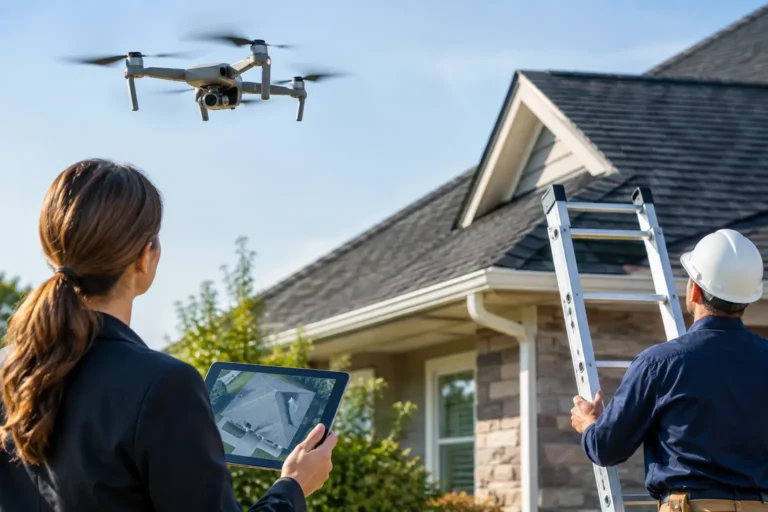
A roof can look fine from the driveway and still be one of the costliest surprises after possession. That is why drone roof photos versus ladders is more than a question about inspection equipment. For an Edmonton homebuyer, it is about how clearly the roof’s condition can be documented before you remove conditions and take on the cost of the home.
A ladder has long been part of a home inspector’s toolkit. It still has a place. But a ladder only reaches certain edges, and walking a roof is not always safe, appropriate, or even possible. High-resolution drone photography gives the inspector a different view – often a broader, clearer record of the roof surface, flashings, valleys, penetrations, and hard-to-see areas.
The best inspection is not about choosing one tool for every house. It is about using the right method to see what matters, explain what was found, and give you useful information for your purchase decision.
Drone Roof Photos Versus Ladders: The Real Difference
Ladders provide physical access. A ladder can help an inspector closely examine an eave, gutter, soffit, fascia, roof edge, or lower roof section. On a safe, accessible roof, close observation may reveal details that are harder to confirm from the ground.
But ladder access has limits. A steep roof, fragile shingles, wet surfaces, snow, ice, high winds, multi-story elevations, or an obstructed yard can make roof access unsafe. Some roofs also have materials that can be damaged by foot traffic. An inspector should not create a problem while trying to inspect for one.
Drone photography addresses a different part of the job. A 4K drone can capture wide roof planes and elevated details from angles that are difficult to see from a ladder or the ground. This is especially valuable on larger homes, complex rooflines, homes with multiple levels, and properties where the rear or upper roof areas are not readily accessible.
The advantage is not simply getting an aerial photo. It is getting a documented view that can be reviewed carefully, included with the inspection findings, and discussed with the buyer in plain English.
What a Drone Can Help Reveal
A drone does not see through roofing materials, and it cannot replace a full inspection of the attic, ceilings, insulation, ventilation, and visible interior conditions. What it can do is make exterior roof observations much more complete.
Clear aerial images can help identify missing, lifted, curled, or deteriorated shingles; exposed or damaged flashing; aging pipe boots; open or worn sealant around penetrations; debris buildup in valleys; damaged gutters; and areas of uneven wear. Photos can also show whether a roof has widespread granule loss, patching, or an aging appearance that deserves a closer conversation with a qualified roofer.
For buyers, context matters. One missing shingle is different from widespread deterioration across several roof slopes. A small sealant issue around a plumbing vent is different from a roof that appears near the end of its serviceable life. Good photos help support that distinction.
They are also useful after the inspection. When you are reviewing a same-day report, speaking with your agent, or requesting a repair estimate, a clear image helps everyone understand the concern without relying on vague descriptions such as “roof issue noted.”
Why roof documentation matters during negotiations
A seller may not agree to every repair request, and a home inspection is not a warranty. Still, documented conditions give you a stronger basis for a practical discussion.
If photos show worn shingles, damaged flashing, or a concern at a chimney transition, you can ask the right follow-up questions. You may seek a roofing opinion, request a repair, negotiate a credit, or adjust your budget for work after closing. The goal is not to turn every observation into a deal breaker. It is to avoid making a major financial decision with incomplete information.
When Ladders Still Matter
Drone imaging is a valuable inspection tool, not a reason to ignore close-range observation. A ladder may be the better choice for examining lower-level roof edges, gutters, fascia, soffits, downspout connections, and details where an inspector needs a closer look from a safe position.
It can also help an inspector assess signs of water management problems. Overflow staining, loose gutters, deteriorated fascia, and blocked downspouts can contribute to moisture concerns around the exterior and foundation. Those items are not always visible in the same way from above.
The right approach often combines methods. The inspector may use a ladder to assess accessible exterior components, inspect the roof from the ground and elevated positions, capture drone images of the full roof surface, and check the attic for signs that support or challenge the exterior observations.
That last step is critical. A roof may look weathered but show no visible moisture staining in the attic. On the other hand, a roof that appears acceptable from above may have poor ventilation, condensation, staining, or previous leakage visible inside. A sound assessment considers the evidence from more than one location.
Safety Is Not a Shortcut
Some buyers assume that an inspector who does not walk every roof is cutting corners. That is not necessarily true. Roof walking is not automatically the most thorough or responsible option.
Walking on a brittle shingle roof can dislodge granules or crack tabs. Walking on a steep, wet, icy, or snow-covered roof can create an unnecessary fall risk. Certain roofing materials, including older or fragile coverings, may not tolerate foot traffic well. A home inspector must make a judgment based on conditions at the property that day.
In Edmonton and the surrounding area, weather can change that judgment quickly. Frost, wind, snow cover, and wet roofing materials are common realities. A drone may allow a much better visual assessment than a ground-only review when it is not safe to climb or walk the roof.
That is not an excuse for vague reporting. If conditions limit visibility, the report should say so clearly. If a concern cannot be fully evaluated, the buyer should know what remains uncertain and whether further review is recommended.
What Homebuyers Should Expect From a Roof Inspection
You do not need an inspector to promise that every roof defect will be found. No visual home inspection can make that promise, particularly where materials are concealed or weather conditions limit access. You should expect honesty about what was visible, what was not, and what the findings mean for your decision.
At JBR Inspections, 4K drone roof photography is used on every property because roof visibility should not depend only on whether an inspector can safely walk the surface. The images are paired with the rest of the inspection, including attic observations, moisture testing where needed, and a clear report that identifies actionable concerns.
Look for reporting that answers practical questions: Is there visible damage? Does the roof appear to have remaining life or show signs of age-related wear? Is there evidence of leakage or ventilation concerns in accessible attic areas? Should you obtain a roofing contractor’s evaluation before closing? Those answers are more useful than a generic statement that the roof was “checked.”
A drone is not a replacement for judgment
Aerial images can be impressive, but photos alone do not protect a buyer. The value comes from an experienced inspector interpreting what the images show alongside the home’s age, roof design, accessible attic conditions, drainage details, and visible signs of moisture.
For example, dark areas on shingles may be staining, shadows, moisture, or normal variation in the material. A photo can flag the area. Inspection experience helps determine whether it appears to be a maintenance item, a possible defect, or something that needs a specialist’s input.
That is the difference between collecting images and delivering inspection guidance.
Before you finalize a purchase, make sure the roof has been viewed in a way that is safe, well documented, and honest about its limits. Clear roof photos, close exterior observations, and a careful look inside the attic give you a far better basis for deciding what to negotiate, what to budget for, and whether you are comfortable moving forward.