
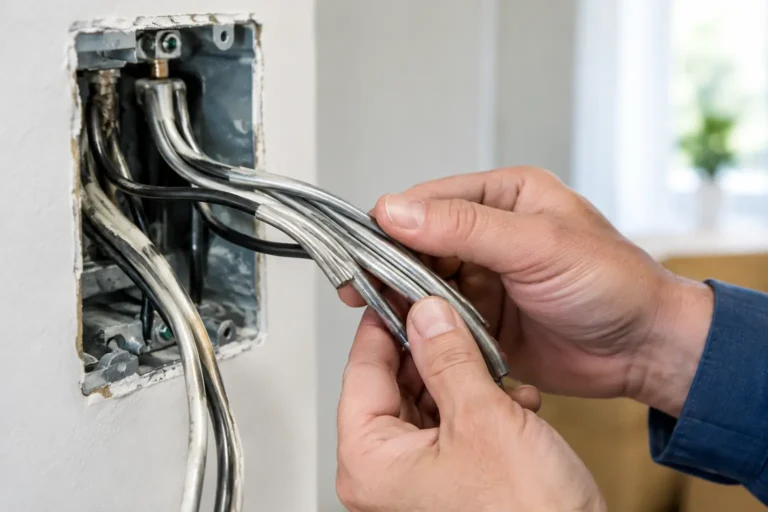
A clean electrical panel and freshly painted walls can make an older home feel move-in ready. They do not tell you what is behind the outlets. Learning how to identify aluminum wiring gives buyers a better starting point when they are considering homes built or updated during the 1960s and 1970s, when aluminum branch-circuit wiring was more common.
Aluminum wiring is not an automatic reason to walk away from a home. It is, however, a condition that deserves a careful look before conditions are removed. The concern is usually not the wire itself. It is how that wire connects at outlets, switches, light fixtures, breakers, and splices. Poor or aging connections can loosen, overheat, and create a fire risk that is not visible during a casual showing.
Where Aluminum Wiring Is Most Likely Found
In many older homes, aluminum was used for smaller branch circuits that feed outlets, lights, and switches. Homes built or substantially wired from roughly the mid-1960s through the mid-1970s deserve particular attention. That date range is a clue, not proof. A property may have had only part of its wiring replaced, or an addition may use newer copper wiring while the original portion of the home still has aluminum circuits.
Larger aluminum conductors are also commonly used for service entrance cables, feeders, and some high-amperage equipment. That is a different situation from aluminum branch-circuit wiring. Large aluminum conductors can be properly installed and remain serviceable for many years. A buyer should not assume every aluminum conductor is a defect or that every electrical upgrade is required.
Age, renovations, and the extent of access all matter. A 1970s home with an updated panel may still have original branch wiring behind the walls. Conversely, a home of the same age may have been fully rewired. The only responsible approach is to verify what can be seen and recommend further evaluation where the evidence is incomplete.
How to Identify Aluminum Wiring During an Inspection
The most reliable clues are found at accessible locations, not by guessing from the home’s age. An inspector may observe wiring at the electrical panel, inside an accessible attic or basement, at unfinished walls, and at selected outlet or switch boxes when it is safe and appropriate to do so.
Check the printing on the cable
Cable jackets and individual conductors often have manufacturer markings. Look for wording such as “AL,” “ALUMINUM,” or an aluminum alloy designation. The lettering may be faint, covered by dust, or hidden where the cable enters a box, so its absence does not confirm copper wiring.
The exposed conductor color can offer a clue. Aluminum typically has a silvery appearance, while copper has a reddish-brown tone. But color alone is not enough to make a call. Conductors can oxidize, be coated, or be difficult to see without disturbing electrical components. Wiring should never be scraped, bent, or pulled apart just to identify its material.
Look inside the electrical panel
The main panel is often the best accessible place to confirm conductor material. With the cover removed by a qualified inspector or electrician, branch-circuit conductors may be visible at breakers and neutral bars. Labels, conductor size, and termination details can provide useful evidence.
A modern replacement panel does not prove the branch wiring was replaced. In fact, panel upgrades are sometimes performed while original circuits remain in place. This is one reason a home inspection report should distinguish between the condition of the panel and the condition of the wiring throughout the house.
Inspect accessible outlets, switches, and fixtures
Where access is appropriate, wiring visible in electrical boxes can help confirm the type of conductors used. An inspector also looks for warning signs around connection points: discoloration, melted plastic, loose devices, damaged insulation, scorch marks, or connections that do not appear suitable for the conductor material.
Homebuyers should not remove outlet covers or attempt their own electrical investigation during a showing. Even a simple-looking box can contain energized wiring, damaged insulation, or a loose connection. This is work for a qualified professional.
Review permits and renovation records
Sellers may have invoices, permits, or renovation documents that show when electrical work was completed. These records are helpful, but they should be read carefully. “Electrical updated” can mean a new panel, a few added circuits, or a complete rewire. Those are very different scopes of work.
If the seller states that aluminum wiring was remediated, ask what method was used, who completed the work, and whether permits or final approvals are available. Clear documentation can reduce uncertainty. Vague assurances should lead to further evaluation, not assumptions.
Why Aluminum Branch Wiring Can Be a Concern
Aluminum expands and contracts more than copper as it warms and cools under electrical load. Over time, that movement can contribute to loose connections if the terminals, connectors, or devices are not designed and installed for aluminum conductors. Aluminum also oxidizes at its surface, which can increase resistance at a poor connection.
The result may be heat where heat does not belong. Warning signs can include flickering lights, warm or discolored outlet covers, breakers that trip repeatedly, a burning odor, buzzing at a switch or receptacle, or appliances that lose power intermittently. None of these symptoms should be ignored, whether the home has aluminum or copper wiring.
At the same time, no visible warning signs do not guarantee that every connection is safe. Most electrical connections are concealed. A standard home inspection can identify accessible evidence and risk factors, but it cannot inspect every outlet box or predict the condition of every hidden splice.
What a Buyer Should Do After Aluminum Wiring Is Found
The right next step depends on what is present, how extensive it is, and whether signs of improper or overheating connections are found. If aluminum branch wiring is confirmed or strongly suspected, ask for an evaluation by a licensed electrical contractor before your inspection contingency expires.
That electrician can determine whether the wiring is limited to a few circuits or found throughout the home. They can also assess the panel, receptacles, switches, fixtures, splices, grounding, and connection methods. Their recommendation may range from replacing specific devices and connectors to a more extensive repair or partial rewire.
Do not accept a verbal statement that “it has been fine for years” as an electrical assessment. Many connection problems develop gradually and may not show up until a circuit is heavily used. A proper evaluation gives you a clearer picture of safety, repair scope, and likely cost.
Use the findings in your purchase decision
For a buyer, the value of identifying aluminum wiring is not just technical. It affects negotiation, insurance questions, and your renovation budget. Depending on the electrician’s findings, you may ask for repairs by a qualified contractor, seek a credit, adjust your offer, or decide the home is not the right fit.
There is no one answer for every property. A well-documented remediation completed by a qualified electrician is very different from widespread aluminum wiring with questionable devices and no records. The home’s price, overall condition, and your planned renovations all belong in the decision.
If you are purchasing an older Edmonton-area home, a thorough inspection helps put this issue in context with the roof, plumbing, foundation, heating system, and other costly components. JBR Inspections documents accessible electrical concerns in plain language so you know where a specialist’s opinion is needed before you commit.
Do Not Confuse a Visual Check With a Full Electrical Evaluation
Thermal imaging and electrical testing can reveal useful clues, such as abnormal heat at an accessible panel or a problem on a tested circuit. They do not identify every aluminum conductor hidden behind drywall, and a normal reading on inspection day does not rule out a future connection issue. Electrical problems can be intermittent and may only appear under certain loads.
That limitation is not a reason to skip the inspection. It is a reason to use the inspection correctly: as an informed first look that identifies visible conditions, explains the risk, and points you to the right next step before closing.
A home with aluminum wiring may still be a sound purchase. Make the decision with evidence, a qualified electrician’s assessment when warranted, and enough time in your contract to address what is found. That is far better than discovering an electrical concern after the keys are in your hand.